Showing posts with label Work. Show all posts

Tuesday, August 25, 2026

Summer Common Grace: Working with Jesus in the World


Faith, Work, and Economics (FWE)
can be integrated into the local church
as part of the vital importance
of holistic discipleship
in following Jesus. 

+ Skye Jethani & Luke Bobo

Summer is almost finished, so you might be thinking, "Sully, why bring up work?" I understand. Rest is a seriously good thing. And I think if we truly believed and lived in the rest God gives in His grace, we would find that the work He has offered us is actually part of His Good News and His common grace.

Ever since reading Amy Sherman's Kingdom Calling: Vocational Stewardship for the Common Good, Tim Keller and Katherine Leary Alsdorf's Every Good Endeavor: Connecting Your Work to God's Work, and Steve Garber's Visions of Vocation: Common Grace for the Common Good and The Seamless Life alongside attending the Soma Faith & Work Summit and being introduced to Made to Flourish and the Theology of Work Project (along with Letters to the Exiles quirky and thoughtful "Creative Service" video), I have grown in wonder at the plan and purpose for humanity that God has given us from the beginning of creation that will continue into new creation. Along with Skye Jethani and Luke Bobo's Discipleship with Monday in Mind and much more, I feel we have a growing abundance of wise, practical, and inspiring resources to help us see how our work is connected with God's work where we spend much of our time.

Below are some excerpts from resources including Discipleship with Monday in Mind that help capture some of this bigger picture, so that even as you might be looking forward to a vacation or getting back to work after one, you can look for the grace of good in every nook, cranny, or alcove of your working world.

Faith, Work, and Economics
Integrated into a Life
of Following Jesus

In Christian Mission in the Modern World, John Stott concluded that, "We must begin with vocation." We must see the entire biblical text as a coherent narrative of creation, fall, redemption, and consummation, revealing God's design and desire for human flourishing. We must regain the transforming truth that the Good News of Jesus speaks to every aspect of human existence, calling us to discipleship in all areas of life.

Scripture tells us that, as image bearers, we have been created by a working God – with work in mind. That means, in part, that we have been created with community and collaboration in mind; work is not an isolated activity, but an interdependent one. We presently live in a broken and fallen world where our work is not what it ought to be. The Good News is that, through the redemptive work of Jesus, the work we do and the workplaces we inhabit are profoundly changed by the Gospel.

With a growing understanding of the church's mission in the world, we will enthusiastically embrace our congregation's everyday work life. We will grasp with new conviction and passion that economic flourishing matters and that a primary work of the church is the church at work. + Tom Nelson, President of Made to Flourish 

Infusing Thoughtful Language
as We Work with
Good News in Mind

We help each other see that everyone is in full-time ministry. This emphasis dovetails well with biblical teaching of the priesthood of all believers (1 Peter 2:4-10). So we avoid phrases such as, "secular work," "kingdom work," "full-time Christian work," and "moving from success to significance." We're also careful to avoid language that minimizes temporality. We avoid ideas encapsulated in expressions like "living for the line (eternity) rather than the dot (temporality)." We also try to eschew devaluing the material world with phrases like, "What really matters are people's souls." Another common phrase we might jettison, "Make your life count for God," since it can diminish people's sense of their intrinsic value as embodied image bearers in the here and now.

To summarize some of the key thoughts and excerpts: 
When we worship with Jesus' Church at a service, mass, or Divine Liturgy in a corporate worship setting, we step into this sacred time and space together with God to experience again how earth continues to be filled with heaven as the Word, Mysteries or sacraments, Spirit, and songs shared with the communion of saints unveil God with us again and again. 
Then, when we ask, "Hey, what's on your calendar this week?" our tangible worship of God together connects to our cared for life in the liturgy of our days, so that when we ask God for wisdom, courage, and help during our work week, we know and experience how He answers from the overflow of the Kingdom of heaven. 
We don't want people to think that worship is something that takes place merely on one day of the week. It's something we get to do when we gather, and it's something we get to do when we scatter. All work can be a form of worship that, when done well and ethically, is done "heartily, as for the Lord" (Colossians 3:23-25).

We want to be governed by the motto that "the Church is where faith and life connect." Faith should inform all of life, of which work is a significant part. We want to be Jesus' Church for the city. We want to seek to be the kind of local church that, if we were to shut our doors, the city would mourn. "There's not a square inch that doesn't belong to Jesus" (an adaption of a famous quote by Dutch theologian Abraham Kuyper).

Affirming All Vocations:

Preparing lattes matters to God. Changing dirty diapers matters to God. Cooking a meal matters to God. Developing an Excel spreadsheet matters to God. As someone once said, "If it is not sinful work, it is sacred work." Work is not only sacred but an opportunity to worship. The ability to work is a gift and a sacred practice. Work is an opportunity to worship, as we join God in the everyday invitation to represent Him.

To communicate the sacredness of work with the gathered Church, you can have "Faith at Work" interviews every 1-2 months. During the interview, ask five basic questions:

1. What type of work do you do? 
2. How do you try to do that work as a follower of Jesus? 
3. How does sin (i.e. selfishness, laziness, apathy, greed, injustice) seem to affect your work? 
4. How do you try to serve your neighbors through your work? 
5. How can we pray for you?

We can also incorporate this with the time with the kids. Child-friendly props are brought in, and teachers ask questions such as, "What do you want to do when you grow up?" and "How can you serve Jesus through that type of work?" The aim is to get children thinking about faith and work at an early age.


Another complementary approach (i.e. switch every other month) is to emphasize, celebrate, and affirm a different industry each month. For example, January can be education. February can be finance. March can be technology, healthcare, research, or childcare. Choose a person involved in that area and ask these basic questions:

1. What type of work do you do? 
2. How did you feel called to do what you're doing? 
3. What are certain opportunities or obstacles you're facing in your work? 
4. How does your faith speak to those obstacles? 
5. How can we pray for you?

One more set of questions (i.e stories of servants and stewards, 1 Corinthians 4:1) you might ask is: 

1. How do you cocreate with God through the work that you do? 
2. Where do you experience brokenness? 
3. Where do you experience restoration and redemption through the work you do? 
4. How do you sense that your work is part of God's greater work?

The cumulate effect can be holy and inspiring:

1. People have a sense of how God made them, and therefore of the good works that they are created to walk in.
2. People, in their work context, understand the stewardship or cultural mandate of Genesis 1 and 2 and what they are stewarding and what aspects of God's character are being reflected.
3. People take the command to "love your neighbor as yourself" seriously, and they see their work as a way of loving their neighbor.
4. People realize that the workplace can be a rich context in which to proclaim the gospel.

Working the Good News:
Commissioning People to Their Work

After conducting an interview during the time the Church is gathered, invite all congregants that are in that particular industry to stand and lead a commissioning service much like you would to commission someone to go to another city or another country to share the Good News of Jesus.

You can commission people in law, the arts, the health industry, at home, and more. This strengthens the vision to see all of life as sacred when it comes under the reign of Jesus instead of deepening the divide between sacred and secular.

For example, after commissioning those in the tech industry at Bellevue Presbyterian Church in Bellevue, Washington, Pastor Ryan Beattie said a female visitor hurriedly approached Beattie and said, "It's our first Sunday visiting here. My husband had never seen his faith relating to his work." The commissioning example was powerful for this man. In New York City, Jon Tyson mentions that someone said during a similar commissioning, "That was the most powerful moment in my entire life in church. Thank you." Such examples simply underscore the fact that we were never meant to live a compartmentalized life; our faith should inform our parenting, our citizenship, and our work.

Another approach is before opening the Word, invite a person representing a particular vocation to come forward. For example, have a schoolteacher come up and read a prayer for all educators. Then invite all teachers to stand and have the congregants clap and cheer for them. Then commission all of them to go and educate. Commissioning services have a powerful ability to affirm people in their work.

Working the Good News:
Preaching & Teaching About Work

The sermon or homily in a worship service provides an ideal time to teach on the importance of faith and work integration. For example, a sermon around Labor Day Weekend with a focused prayer and commissioning time can make an impact.

In this next generation, many people don't talk about "careers" as much as "callings." We want to believe our work is more than a job for personal advancement. We want to understand how our work relates to a larger vision how it contributes to the common good and even to God's cosmic purposes. Teaching on faith and work helps make a concrete connection on how we can use our knowledge, gifts, and talents to make a difference in the lives of others.

We can also incorporate anecdotes and illustrations that draw from the variety of vocations represented by people in the congregation. Doing so speaks of those vocations in a way that affirms the dignity of the vocation.  

Another practice during a service is to host a forum featuring people from different occupations who talk about what they do and why it's beneficial for people. After sharing, congregants are allowed to ask questions. Often there can be more questions than there is time to answer them. Then have the entire congregation pray that God would make these sisters and brothers flourish in their callings.

Christ is all,

Rev. Mike "Sully" Sullivan

Monday, August 10, 2026

Story of God CN | Beautiful Faith at Work in a Sanitation Truck


If it falls to your lot to be a street sweeper
... Sweep streets so well
that all the hosts of heaven and earth
will have to pause and say:

"Here lived a great sweeper
who swept his job well.
"

+ MLK


For this Special City Notes (CN), in honor of the work we get to do in the city of Worcester across all our vocations that serve our communities and neighbors, and to complement the "Faith at Work" interviews I have had the joy to do with people throughout Emmaus City Church that are similar to what we get to explore in Surge School, I want to provide you with an overview of how God's story in the Bible shapes how we approach our jobs. And what better job to highlight than our sanitation workers who fight biological warfare for us to help keep our city healthy and clean.

Adapted excerpts from Bruce's story
in 
The Symphony of Mission:
Playing Your Part in God's Work in the World 
by Michael W. Goheen and Jim Mullins


Creation
Each morning, Bruce steps into his truck, prays for God's blessing, fires up the engine, and begins his route. While most other drivers find little meaning in their work, Bruce knows that he's embarking on a mission. The hands that grip the steering wheel were created to display the glory of God. One of the first cards he reads each morning displays this quote from Rev. Martin Luther King Jr.:

If it falls to your lot
to be a street sweeper, 
sweep streets like Michelangelo 
painted pictures, 
or Beethoven composed music, 
sweep streets like Leontyne Price 
sings before the Metropolitan Opera. 
Sweep streets like Shakespeare wrote poetry. 
Sweep streets so well 
that all the hosts of heaven and earth 
will have to pause and say: 
"Here lived a great sweeper 
who swept his job well."

Another index card bears the words of Genesis 2:15: "The LORD God took the man and put him in the Garden of Eden to work it and take care of it." As he reads these words, Bruce is reminded that just as God placed Adam in the garden of Eden, so he has placed Bruce in that truck. Bruce's particular plot in God's garden happens to be the back alleys of his city. He cultivates that space for the glory of God. The broken glass, old furniture, weeds, and cinder-block walls are the materials of his sanctuary, a sacred space that belongs to God ... Every plastic bag or dirty diaper that Bruce keeps off the streets is an offering to honor his King. He sees himself as beautifying God's good earth and protecting the masterpiece of God's creation.

Creation Core Questions
Who am I?
How is my identity formed and defined?


Crisis
The reason I find so much joy in my work is that I believe every inch of this world belongs to God and that by keeping the city clean, I'm serving him. He made us to flourish, but everything got messed up a long time ago. All the proof you need is in the back of this garbage truck. When you look back here, you see a lot of formerly good things that are now broken, rotting, and decaying. What used to be a nourishing meal is now rotting meat; what was a good chair is now splintered wood. You and I both know that what's happening in the back of this truck isn't limited to the garbage bin. It's happening in countries at war, in the cancer growing in Dave's liver, in the corruption of politics, in the strain of our marriages, and in the pain we feel in our knees. Sin isn't just a list of bad things you shouldn't do but a disease that infects all of creation, starting with every human heart. It would make sense for God to crush this whole world and all that's broken. However, he doesn't intend to throw the world in the garbage heap but plans to recycle, renew, and restore all things."

Crisis Core Questions
What problems do I see?
Who's to blame?


Covenant Community
Bruce's working before the face of God, lifting up each trash bin with that robotic arm as if his own hands were raised in worship. His coworkers may give him a hard time for his strange love of sanitation, but behind their banter there's a deep level of respect. Several of them treat Bruce as a mentor and a man of integrity who can speak into many aspects of life. His coworkers often show up at his house during the weekends to eat pancakes with the rest of his family. Bruce and his wife have three of their own children, but there are eight seats at their kitchen table. Each week they ask God to fill those seats with people who need a sense of family. Often the seats are filled by Bruce's coworkers, especially the younger ones who have become estranged from their own families. Bruce and his wife know they've been adopted by the Father through Christ, so they take a posture of adoption toward all who need a family.

Covenant Community Core Questions
How do I find people to belong to, to trust?


Christ (Cradle + Cross + Crown)
When Jesus came into this world, he entered the garbage bin of this earth to make all things new. He didn't just snap his fingers to make things better. He stepped into the trash compactor in our place: 'He was pierced for our transgressions, he was crushed for our iniquities; the punishment that brought us peace was on him, and by his wounds we are healed' (Isa. 53:5). Essentially, whenever you see that hydraulic trash compactor crushing the brokenness, you should be reminded of what Jesus did on the cross. He was crushed so that we, along with the world don't have to be. In his resurrection, he shows the power of God to deal with the brokenness of sin, Satan, and death – and to renew the world."

Christ Core Questions
What will save me, others, and the world?


Church
Not only does Bruce give of his time for the sake of his coworkers; he also intentionally chooses the hardest routes. By bearing the burden of a difficult route, he imitates the self-giving pattern of the cross. Driving his garbage truck isn't just a means of serving his coworkers; it's Bruce's way of washing the feet of the city. As he drives through each alley, he prays over the homes there, prays for the flourishing of the city. He imagines what would happen if nobody were to pick up the trash. Life would become miserable as God's good world would be covered in garbage, and the stench would offend the nostrils of the whole neighborhood. Disease would drive people from their homes. By removing trash from the streets, Bruce tangibly loves his neighbor. His coworkers often ask Bruce why his life is so different, why he loves his job so much, and why he goes the extra mile to serve others. It would be easy for Bruce to give them a stale, memorized gospel presentation. Instead, Bruce has reflected deeply on the redemptive analogies that are embedded in his context. So he often takes his coworkers to the back of the truck to look at the trash and says something like the Crisis and Christ sections above ... After one of these conversations with Bruce, some people roll their eyes or politely try to change the subject. But sometimes people want to learn more, and Bruce invites them to come be with some people with his church so that they can experience community and see the gospel lived out in the lives of many different people. And occasionally, Bruce has the privilege of baptizing one of his coworkers in the community pool at his apartment complex.

Church Core Questions
How do I approach my work, 
calling, and purpose? 
(And again, how do I find people 
to belong to, to trust?)


(New) Creation
What can we notice about Bruce's participation in God's mission? You probably noticed that his life displays the gospel from many angles. He displays God's character through his good work, his sacrificial service to his coworkers, and his gospel analogies from within his context to verbally proclaim the gospel. Rather than pitting these aspects of mission against one another
 –debating which one is most important – he embraces all three of them, knowing that work, service, and evangelism were intended to work together to bear witness to God and offer a glimpse into the shalom that is the goal of the true story of the world.

(New) Creation Core Questions
What is ultimately worth placing my hope in?


Now, after taking a deeper look at Bruce's work and as you think about your own work, I invite you to consider these four questions:

Creation | Identity
How does God reveal
what the work of the Creator,
Gardener, Builder, Healer, Champion, etc.,
is like through my work?


Crisis | Problem
Where do I experience brokenness 
with my job
(ex. how I relate to it,
how it does or
does not accomplish its goals, etc.)?
Where do I see brokenness
in how I and others
relate to the work I do?


Covenant Community + Christ
Promises, People, Redemption
When do I see reflections of
God's work of redemption
(i.e. bringing freedom, value, restoration)
in myself and in others I work with?


Church | Purpose
When do I sense that my work
is part of God's greater work in the world?


Asking these questions, along with observing how our work interacts within the Story of God, can help us understand how Jesus comes to rescue us and set us free not to diminish our work into idolatry or idleness.

Work Idolatry Examples

My job is my primary source
of value, identity, and satisfaction;
I know who I am and
my worth by what title I hold.

My job is the way 
I can perform the best 
in order to promote my success 
and make a name for myself 
to boost my reputation 
among those I most want to impress.

Work Idleness Examples

My job is just another means 
to make money, 
bide my time before the weekend, 
and get to vacation 
and eventually retirement.

My job is the most frustrating thing
in my life because I control it the least,
so I invest my worst self in it
and save my best for other things
(i.e. entertainment, hobbies, escape).

May we each receive Jesus' rescue
and find our identity in the God
who made us and welcomes us
into a greater story that helps us
see our work for what it truly is –
the garden God has placed us in
where we get to steward what God gives,
serve those around us,
and tell the story of renewal.


Lady K-Fever Sanitation Truck Artwork NYC

More Story of God posts:


Christ is all,

Rev. Mike “Sully” Sullivan


Monday, October 6, 2025

Deep Down Faith | The Return of the King: Doubts and Secrets


Jesus Christ rules over all.
To follow this Lord is
to serve Him wherever we are,
without fitting in,
light in the darkness,
salt in a spoiling world.

This fall, I get to continue in the joy of spending some time with young people connected to Emmaus City Church engaging the Scriptures alongside one of my favorite reflections on God called Deep Down Faith by Cornelius Plantinga Jr. I've read this book four times now and Plantinga, like C.S. Lewis in many ways, has a gift for discussing profound thoughts in whimsical, rich, and accessible ways for young and old alike. Some previous Deep Down Faith posts include:


Today's post will focus on Jesus and a bit of what He meant when He said, "The Kingdom of God has come near" (Mark 1:15).

The Universe is God's Kingly Realm

All the Bible, all Christianity, and all world history is the story of the universal war between sin and holiness, evil and good, the kingdom of darkness and the Kingdom of light. The warring is not just on the side of the rebels. God the King doesn't simply hand over His world to them. God doesn't just give up on His rebel children and say, "To hell with you." For the universe belongs to God. Our world belongs to God. He wants it back. And He has taken certain steps to get it back.

The Bible traces these steps. God makes a covenant with Abraham and seals it with Moses and the law. God rules His people Israel through priests and judges and kings and prophets. Later God establishes Jesus' Church, among whom the Gospel may be preached, sacraments celebrated, and people shaped to look and act like God.

For the whole universe is God's kingly realm. And all these things  covenant, prophets, law, church, sacraments  are the tools of God's kingly reign. They are all part of what could be called God's reelection campaign. God wants the whole world to acknowledge again that He is the King and that our world belongs to Him.

Why? Is God so weak and insecure that He needs lost of praise and acknowledgement to build Him up? No. God wants us to recognize His kingship because it's true: He is King, and our world does belong to Him. And He wants to protect us from falling under the rule of other kings who will sooner or later destroy us.

The gospels tell us the most important part of this story. They tell us of the turning point in this universal war: when a man from Nazareth leaves His home, moves out into Galilee, and begins to preach. "Repent," He says. "Lay down your arms. For the Kingdom of God is coming near."

The world has become enemy-occupied territory. It has become the Kingdom of the evil one. "Christianity is the story of how the rightful king has landed, you might say landed in disguise."

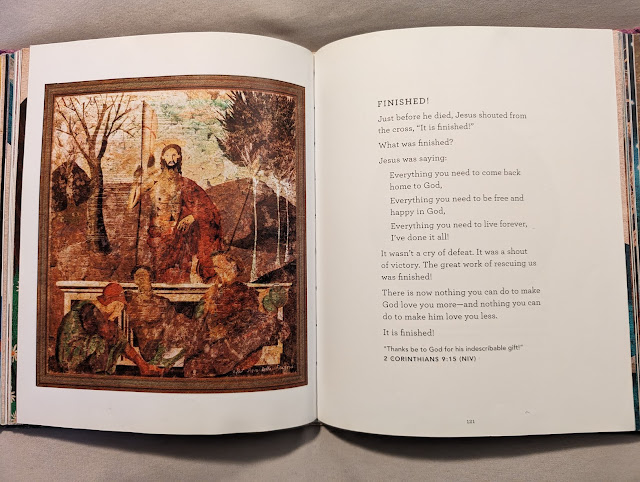
"It Is Finished" by Sally Lloyd-Jones

To Serve Him Wherever We Are

To follow this Lord is
to serve Him wherever we are ... (in)
our sexuality ... marriage and family ...
education ... our work, 
even in dull routine ...
rest and leisure ...
science and technology ...
politics ... for

The whole universe
belongs to God the King 
and Jesus the Lord.
A thoughtful Christian
once put it like this:
Of every square inch
in the universe,
Jesus Christ says,
"It is mine."

Disciple Definition by C René Padilla

In Medicine and Health Care

Christians fight against drug abuse, including alcoholism, and try to help its victims with tough love. In the kingdom of darkness, athletes, rock stars, and actors sometimes celebrate the high life of drug abuse till it wrecks or kills them. But in the Kingdom of God, one's body is a temple of the Holy Spirit. God lives in us, and we must keep His house clean.

In Earthkeeping

Christians fight against abuse of nature. Christians and others reclaim the earth with skillful animal care and with expert soil, water, and forest management. In the kingdom of darkness, people strip and rape the earth for profit. They foul clean air and pollute pure water. They neglect and abuse animals. But in the Kingdom of God, the earth and its fullness are treated with respect. For they come from the hand of God.

In Sexuality

Christians fight against the attitude that women are men's inferior servants. Christians see men and women as equal partners serving God together and trying to build each other up. Christians also fight against the use of sex to trap, humiliate, or make money off people. In the kingdom of darkness, sexual partners are disposable tissues and bones. In the Kingdom of light, sexuality is for imaging God in love and trust. It is a gift of such power and beauty that is is protected by the covenant of marriage.

In Education

Christians fight against the idea that learning is just for getting jobs and making money. In the kingdom of darkness, learning happens without the light of God's Word to shine on it. Learning is used to make people powerful but not to make them wise. But in God's Kingdom, education is for deepening our wonder at the greatness of God and His world. It also prepares us to serve wisely all across the Kingdom of God itself.

In Politics

Christians fight against the use of power to frighten other nations or to take advantage of the weak citizens of one's own nation. In the kingdom of darkness, citizens ride over elderly and poor people, children and minorities, and all those who don't matter except when they vote. But in the Kingdom of God, governments protect the freedoms and rights of all citizens  and even make extra allowances for those who are disadvantaged.

Our religion is not just for devotions and worship. We also serve God when we take care of our bodies, care for animals and plant trees, respect the dignity of the other sex, learn a math lesson well, serve the poor and elderly  and do all of this because we are citizens of the Kingdom of God.

How Does the Kingdom of God Shape Our Political Discussion?

Doubts & Secrets of the Kingdom

Every once in a while Jesus' disciples would ask about the Kingdom. "Lord," they would say, "Lord, if it isn't too much to ask, when will You restore the Kingdom?"


Of course, they knew Jesus had done some good things. But it didn't seem like enough! Shaping up a few ragged beggars — that wouldn't budge King Herod. Healing some sick folks, befriending a prostitute, or having dinner with a weasel like Zacchaeus  that wouldn't shake up a man like Caesar!  

Looking at the Roman army and the Roman tax system and all the arrogant Roman power, the disciples must have struggled hard to believe that Jesus was King. Everything they could hear and see told them there was no king but Caesar.

For such doubts Jesus tells one of the secrets of the Kingdom. The Kingdom of God, He says, is like a mustard seed. A man reaches with two fingers into his seed pouch and draws out a tiny seed. The seed is so small you can hardly see it. But the man sows this seed into the ground. Slowly, over the months and years, the seemingly lifeless seed grows into a ten-foot shrub.

The Kingdom is like that. At the time of sowing, progress may look small and slow. But one day there is the tree.

Seeds of Hope by Bette Dickinson

That is God's way in history with His Kingdom. Who would have thought that God could make a great nation out of Abraham and Sarah  two barren people old enough to be on Medicare? Who could have known what God would do with one man named Luther  a monk who nailed some protests to the door of a church building and thus launched the Protestant Reformation? Who would have thought that a weary black woman named Rosa Parks could start a movement that would help millions of people?


Prayer Starter

Pray "Your Kingdom come,
Your will be done ... "

The LORD Most High is awesome,
the great King over all the earth ...
God has ascended amid shouts of joy
the LORD amid the sounding trumpets.
Sing praises to God, sing praises;
sing praises to our King, sing praises.
For God is the King of all the earth;
sing to Him a psalm of praise.
God reigns over the nations;
God is seated on His holy throne.
+ Psalm 47:2, 5-8

Deep Down Faith,
pgs. 206-213

Next post:
New Heaven and Refilling the New Earth

May God's Kingdom come, His will be done.
Que le Royaume de Dieu vienne, 
que sa volonté soit faite.
愿神的国降临,愿神的旨意成就。
Nguyện xin Nước Chúa đến, ý Ngài được nên.
Jesús nuestra Rey, venga Tu reino! 
🙏💗🍞🍷👑🌅🌇

With anticipation and joy,

Rev. Mike “Sully” Sullivan


Monday, May 22, 2023

CN | The Seamless Life: Coherence + Continuity + Congruence


Catch a glorious vision of hope in Christ, a coherent life, a seamless life. + Dr. Sutrisna Harjanto


As we anticipate starting Surge School again, I keep coming back to Dr. Steven Garber's dedication to his grandchildren at the beginning of his beautiful little book, The Seamless Life:

Live into the vision of a seamless life, a coherence between who you are and why you are, giving meaning to what you do with the lives that are yours.

This is what we hope to see happen within the hearts, minds, and everyday living of participants that partner with us for Surge School, fully knowing that to capture a vision of a seamless life will be a process that takes time, care, community, challenge, and invitation into wonder. 

Laura Fabrycky captures a bit of what this wild venture can be like:

Exercise the daily struggle to see the world truthfully, to know it in its heartache and pain, and to keep loving it still. See your own corner of the world better, honor its complicated goodness and beauty, and love your places and people with creativity, courage, and above all, hope.

Our goal or telos for Surge is to help people see the world through the eyes of Jesus, knowing its heartache and pain, and then choosing how to faithfully love it still. 

Steven Garber is a helpful sherpa in leading us along on such a path, and below are some adapted excerpts from The Seamless Life to provide you with a window into what engaging Surge School could be like for you in the year ahead. Ultimately, the telos or goal will be to connect your daily life and work with God's abundant life and work, your story with the story of God for the life of the world.

The Seamless Life: At Work in the World and Making Sense of Life

The most important questions always are: 

Who or what is our reason for being? 
Why do we do the things we do? 
What does it all mean?

Our vocations grow out of our beliefs about the way things are, about what matters and what doesn't matter; what we do with life is born out of our commitments about the meaning of life.

With Jesus, we are invited to live a life, a coherent life, in which what we believe about God and the world is worked out in the way we live in the world. Begun on our knees, we step into our work day by day, contributing to our community, offering an unusual blend of competence and character to the watching world. We are invited to be good at what we do and to be good human beings who image the God we were created to be like (Romans 8:29; 2 Corinthians 3:17-18), a "common grace for the common good" (Matthew 5:43-48).

But to see a story where the complexity of life is honored, and the importance of work is understood, is rare. The best stories are the truest stories, the ones in which we recognize ourselves, full of hope and honor, but also prone to self-deception and self-destruction.

Because vocation is a rich and complex word and is never the same word as occupation, we are always more than our work, though our work matters. We create, but we sweat. We do our best but still disappoint.

Sometimes, heaven meets earth in and through our work, and it becomes almost sacramental—and then sometimes we curse the very work of work. We are our best and our worst at work. And yet, we are invited into a good story, one we could not write for ourselves on our own—because a good story tells the truth about what we do and why we do it. The challenge everyone everywhere faces is connecting the deeper story of who we are with what we do, day by day, year after year. Coherence and continuity matter.

We yearn for the things we love to be the way that we live, even as we realize that the two will never be the same, completely and absolutely, this side of heaven reconciling with earth. We long for what we do to grow out of who we are, for our occupation(s) to be rooted in our vocation. That is the hope of everyone's heart.

Can we pray and workora et labora—at the same time, a life where praying and working are held together, offered as one heart and therefore one life? Can we see and experience "a thin place," where heaven and earth meet in a remarkable way? 
The most important questions are perennial questions, asked and asked again, because they matter—whether we live in the fifth century (when the Benedictine tradition was asking similar questions like the ones above) or the twenty-first century; whether we are African or Russian, whether we are men or women, whether we are tinkerers or prime ministers. They are human questions because human beings ask them. 
To see seamlessly is the hope, perhaps even to see sacramentally, where we have eyes to see where heaven and earth meet—where ora et labora become one—right in the middle of our ordinary lives, lived as they must be in ordinary places.


The Christian life is the lifelong practice of attending to the details of congruence — congruence between ends and means, congruence between what we do and the way we do it, congruence between what is written in Scripture and our living out what is written ... the congruence of the Word made flesh in Jesus with what is lived in our flesh.

Congruence also occurs often enough in a child unselfishly at play; a conversation in which words become as movements in a ballet, revealing all manner of beauty and truth and goodness; a meal bringing friends into a quiet awareness of affection and celebration in a mingling of senses and spirits that provides something like a Eucharistic dimension to the evening.

+ Eugene Peterson

An Invitation to Consider Surge School New England

If some of these thoughts intrigue you and stir curiosity and a hunger to learn more, consider participating in Surge School New England.

May God's Kingdom come, His will be done.
Jesús nuestra Rey, venga Tu reino! 
🙏💗🍞🍷👑🌅🌇


With presence, peace, and many blessings,

Rev. Mike “Sully” Sullivan