
 |
"Such a glorious, sunny day and I must go. But what will my death matter if, because of our actions, thousands of people are wakened and stirred to action?!" + Sophie Scholl on the day she was executed
Sophie Scholl would have turned 100 years old today. To see a potent version of her story with the White Rose resistance on film, I encourage you to watch the Academy Award-nominated film for best foreign film Sophie Scholl: The Final Days. To get a preview of her life from Vintage Saints and Sinners, check out the excerpt below.

"Sophie Scholl: Knock a Chip Out of the Wall" excerpt adapted from Karen Marsh's Vintage Saints and Sinners: 25 Christians Who Transformed My Faith

As in many heroic tales, Sophie's story begins quietly. She was born in Germany in 1921, a time of national scarcity, political violence, and unemployment. Nurtured by their free-thinking Christian parents, the five Scholl children grew up on Socrates, Augustine, and Pascal. They read the texts of Buddhism, Confucius, and the Qur'an. And, of course, they learned the Bible. Verses like James 1:22, "But be ye doers of the Word, and not hearers only." The kids learned early on words must be made real in actions. As the lone pacifist in their tiny conservative hamlet, their father, Robert, admonished them, "What I want for you is to live in uprightness and freedom of spirit, no matter how difficult that proves to be." In fact, this would ultimately cost them everything.
Sophie was only twelve years old when Adolf Hitler came to power in 1933. One by one, the Scholl children joined the Hitler Youth, proud to help Germany achieve prosperity. Sophie relished camping, hiking, and scouting with the Young Girls' League. Her older brother Hans was chosen to cary the flag of his six-hundred-member regiment at the 1936 Nuremberg Nazi Party Convention.
From the very start, Robert opposed the new fuhrer, for he perceived malignant intentions behind Hitler's brash promises. Father and son argued constantly about the Hans's nationalistic enthusiasms. Robert dreaded what lay ahead, declaring, "If those bastards harm my children in any way, I'll go to Berlin and shoot Hitler." Soon the children caught on. Even little Sophie saw that something was very wrong when two of her Jewish girlfriends were barred from her local Girls' League. As a teenager, Sophie became quite open about her hatred of the aggression of the Third Reich. "I will never understand it; I think it is horrible. Do not say it is for the fatherland," she wrote to her boyfriend, Fritz, an officer in the German army.
The Scholls began to resist the status quo. Sophie was reprimanded for reading banned books. Hans was imprisoned for removing the Nazi emblem from his youth troop's flag. Robert was arrested for calling Hitler names.
Like other German teenagers, Sophie was drafted into Nazi service. She endured her term as nameless "labor maid" at the unheated, decrepit Krauchenweis castle. After a day of mandatory field work, as the other girls gossiped and laughed on their bunks, Sophie pulled the blanket over her head and read Saint Augustine by flashlight.
As she pulled weeds out in the blooming poppy fields, Sophie had plenty of time to reflect. "Isn't it a tremendous enigma and ... almost frightening, that everything is so beautiful? In spite of the terrible things that are going on," Sophie wrote to a friend that night. Convinced nonetheless that God will always have the last word against violence, Sophie vowed, "I will try to take the victor's side."
On her twenty-first birthday, Sophie was on a train at last, off to begin her college studies alongside her brother at the university in Munich. Hans welcomed Sophie into his band of buddies — Christoph, Willi, and Alexander. The close confidantes shared a love of art, literature, classical music, hiking philosophical debate — and a fierce opposition to Hitler. But Munich's Maximilian University was no shelter for dissent. It was an intellectual stronghold of National Socialism governed by a high-ranking SS officer and a site of Nazi book burning.
As grim news came that members of the Resistance had been captured, Hans felt convicted by the old Scholl family principle: you've got to stand up for what's right, no matter the cost. Hans saw that the Communists were taking a stand. Why not the followers of Jesus? "It's high time that Christians made up their minds to do something!" he said to his friends. "What are we going to show in the way of resistance when all this terror is over?" he asked them. "We will be standing empty-handed. We will have no answer when we are asked: What did you do about it?" Hans, Sophie, Christoph, Willi, and Alexander, along with Professor Kurt Huber, formed a secret group they name the White Rose. They imagined the Third Reich as an enormous stone wall of impossibility. As the White Rose, they would discover ways, however small, to knock chips out of the wall.
They believed, with the optimism of youth, that if only their fellow citizens knew the truth about Hitler, things would change; their tangible acts of non-violent resistance would spark an uprising and end the war. At night they painted the walls of university and public buildings, declaring in large black block letters, "DOWN WITH HITLER!" and "LONG LIVE FREEDOM!" The members of the White Rose came from Protestant, Catholic, and Russian Orthodox backgrounds, and they shared the convictions of the Christian faith. As it happened, the inspiration for their boldest action came from a Roman Catholic minister, Bishop Clemens August von Galen. From the pulpit, Galen condemned Nazi eugenics, the program ordering the murder of the mentally ill, physically deformed, and incurably sick. Galen's subversive sermons were transcribed, copied, and circulated secretly by hand — and roused widespread opposition. "Finally someone has the courage to speak," Hans exclaimed, "and all you need is a duplicating machine!"
The White Rose covertly wrote, printed, and distributed thousands of illegal flyers, messages of protest and warning: "We must bring this monster of a state to an end soon." "The war is approaching its certain end." "Hitler cannot win the war — he can only prolong it." They left leaflets in public phone booths, university hallways, and mailboxes. At great risk, they traveled by train to mail anonymous letters from other German cities so that the flyers would bear postmarks from across the country. With a cunning that today's social media gurus would admire, the tiny group created the illusion of a large-scale movement.
Leaders of the Third Reich were desperate to know who was behind the notorious White Rose campaign. The truth came out by chance. On February 18, 1943, Hans and Sophie Scholl stood at the top of a staircase high above the university courtyard just as classes were about to let out. Sophie opened a suitcase of leaflets and emptied it over the balustrade. As hundreds of flyers fluttered down in a blizzard of paper, a janitor stepped out into the hall and saw the brother and sister. He grabbed the pair in a citizen's arrest and consigned them to the Gestapo to be imprisoned and interrogated. Within four short days, Hans, Sophie, and their friend Christoph Probst would be on trial for their lives.
How terrified Sophie must have been. In a private moment, she wrote, "I shall cling to the rope God has thrown me in Jesus Christ, even if my numb hands can no longer feel it." But in the courtroom, without a single witness called in their defense, people say that Sophie, Hans, and Christoph remained calm, composed, clear, unflinching as they were condemned to die. The infamous Nazi judge raged and screamed at the young defendants, roaring until his voice cracked, jumping up again and again in a red-hot frenzy. Standing before him, the twenty-one-year-old Sophie broke in calmly and boldly declared, "Somebody after all, had to make a start. What we wrote and said is also believed by many others. They just don't dare to express themselves."
The court's guilty verdict was swift and merciless. Spoken after a night of inexplicably calm sleep, Sophie's parting words to her cell mate were: "Such a glorious, sunny day, and I must go. But how many must die on the battlefields, how many promising young men. ... What will my death matter if, because of our actions, thousands of people will be awakened and stirred to action!"
As they faced their execution by guillotine on that very same day, Sophie and Hans had only moments to say goodbye to their parents. Holding their hands through the prison bars, Hans reassured them, "I have no hatred. I have put everything, everything behind me."
Grasping at something, anything, to comfort her daughter in this heartrending farewell, their mother, Magdalene, said, "Remember, Sophie: Jesus." Sophie paused, and then firmly, almost imperiously, her eyes locked on her mother's, replied. "Yes," she said, "but you must remember, too." She was the daughter of Robert and Magdalene, the parents who raised their children to follow uprightness and freedom of spirit. It is horrible how many Christians risk their lives in the war for an outright senseless cause, Sophie lamented, yet "hardly a single person is willing to risk his life to fight Evil. Someone must do it." As she contended before the Gestapo judge: "Somebody had to make a start."
A prayer of blessing is offered by Sophie and another is offered to Sophie in the film, "Sophie Scholl: The Final Days" by the prison minister, Alt. Here are the words of the prayers:
The prison warden, awed by their courage, made an exception to allow Hans, Sophie, and Christoph to have one last cigarette together. He heard Christoph say, "I didn't know that dying could be so easy. In a few minutes we meet again in eternity?" As he put his head on the block, it is said that Hans cried out in a loud voice, "Long live freedom!"
Thanks to Helmut von Moltke, the sixth leaflet of the White Rose was taken to England via Scandinavia. In mid-1943, millions of copies were dropped by Allied planes over Germany. They now bore the title: "A German Leaflet Manifesto of the Students of Munich."
Sophie was only twelve years old when Adolf Hitler came to power in 1933. One by one, the Scholl children joined the Hitler Youth, proud to help Germany achieve prosperity. Sophie relished camping, hiking, and scouting with the Young Girls' League. Her older brother Hans was chosen to cary the flag of his six-hundred-member regiment at the 1936 Nuremberg Nazi Party Convention.
From the very start, Robert opposed the new fuhrer, for he perceived malignant intentions behind Hitler's brash promises. Father and son argued constantly about the Hans's nationalistic enthusiasms. Robert dreaded what lay ahead, declaring, "If those bastards harm my children in any way, I'll go to Berlin and shoot Hitler." Soon the children caught on. Even little Sophie saw that something was very wrong when two of her Jewish girlfriends were barred from her local Girls' League. As a teenager, Sophie became quite open about her hatred of the aggression of the Third Reich. "I will never understand it; I think it is horrible. Do not say it is for the fatherland," she wrote to her boyfriend, Fritz, an officer in the German army.
The Scholls began to resist the status quo. Sophie was reprimanded for reading banned books. Hans was imprisoned for removing the Nazi emblem from his youth troop's flag. Robert was arrested for calling Hitler names.
Like other German teenagers, Sophie was drafted into Nazi service. She endured her term as nameless "labor maid" at the unheated, decrepit Krauchenweis castle. After a day of mandatory field work, as the other girls gossiped and laughed on their bunks, Sophie pulled the blanket over her head and read Saint Augustine by flashlight.
 |
| Sophie Scholl Saint Augustine Prayer in "Sophie Scholl: The Final Days" |
As she pulled weeds out in the blooming poppy fields, Sophie had plenty of time to reflect. "Isn't it a tremendous enigma and ... almost frightening, that everything is so beautiful? In spite of the terrible things that are going on," Sophie wrote to a friend that night. Convinced nonetheless that God will always have the last word against violence, Sophie vowed, "I will try to take the victor's side."
On her twenty-first birthday, Sophie was on a train at last, off to begin her college studies alongside her brother at the university in Munich. Hans welcomed Sophie into his band of buddies — Christoph, Willi, and Alexander. The close confidantes shared a love of art, literature, classical music, hiking philosophical debate — and a fierce opposition to Hitler. But Munich's Maximilian University was no shelter for dissent. It was an intellectual stronghold of National Socialism governed by a high-ranking SS officer and a site of Nazi book burning.
As grim news came that members of the Resistance had been captured, Hans felt convicted by the old Scholl family principle: you've got to stand up for what's right, no matter the cost. Hans saw that the Communists were taking a stand. Why not the followers of Jesus? "It's high time that Christians made up their minds to do something!" he said to his friends. "What are we going to show in the way of resistance when all this terror is over?" he asked them. "We will be standing empty-handed. We will have no answer when we are asked: What did you do about it?" Hans, Sophie, Christoph, Willi, and Alexander, along with Professor Kurt Huber, formed a secret group they name the White Rose. They imagined the Third Reich as an enormous stone wall of impossibility. As the White Rose, they would discover ways, however small, to knock chips out of the wall.
 |
They believed, with the optimism of youth, that if only their fellow citizens knew the truth about Hitler, things would change; their tangible acts of non-violent resistance would spark an uprising and end the war. At night they painted the walls of university and public buildings, declaring in large black block letters, "DOWN WITH HITLER!" and "LONG LIVE FREEDOM!" The members of the White Rose came from Protestant, Catholic, and Russian Orthodox backgrounds, and they shared the convictions of the Christian faith. As it happened, the inspiration for their boldest action came from a Roman Catholic minister, Bishop Clemens August von Galen. From the pulpit, Galen condemned Nazi eugenics, the program ordering the murder of the mentally ill, physically deformed, and incurably sick. Galen's subversive sermons were transcribed, copied, and circulated secretly by hand — and roused widespread opposition. "Finally someone has the courage to speak," Hans exclaimed, "and all you need is a duplicating machine!"
The White Rose covertly wrote, printed, and distributed thousands of illegal flyers, messages of protest and warning: "We must bring this monster of a state to an end soon." "The war is approaching its certain end." "Hitler cannot win the war — he can only prolong it." They left leaflets in public phone booths, university hallways, and mailboxes. At great risk, they traveled by train to mail anonymous letters from other German cities so that the flyers would bear postmarks from across the country. With a cunning that today's social media gurus would admire, the tiny group created the illusion of a large-scale movement.
Leaders of the Third Reich were desperate to know who was behind the notorious White Rose campaign. The truth came out by chance. On February 18, 1943, Hans and Sophie Scholl stood at the top of a staircase high above the university courtyard just as classes were about to let out. Sophie opened a suitcase of leaflets and emptied it over the balustrade. As hundreds of flyers fluttered down in a blizzard of paper, a janitor stepped out into the hall and saw the brother and sister. He grabbed the pair in a citizen's arrest and consigned them to the Gestapo to be imprisoned and interrogated. Within four short days, Hans, Sophie, and their friend Christoph Probst would be on trial for their lives.
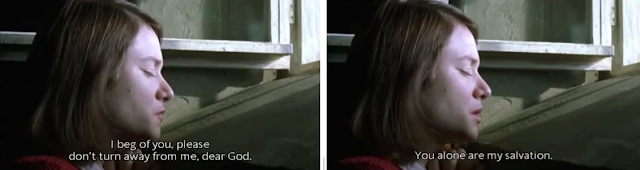 |
| Sophie Scholl Prayer in "Sophie Scholl: The Final Days" |
How terrified Sophie must have been. In a private moment, she wrote, "I shall cling to the rope God has thrown me in Jesus Christ, even if my numb hands can no longer feel it." But in the courtroom, without a single witness called in their defense, people say that Sophie, Hans, and Christoph remained calm, composed, clear, unflinching as they were condemned to die. The infamous Nazi judge raged and screamed at the young defendants, roaring until his voice cracked, jumping up again and again in a red-hot frenzy. Standing before him, the twenty-one-year-old Sophie broke in calmly and boldly declared, "Somebody after all, had to make a start. What we wrote and said is also believed by many others. They just don't dare to express themselves."
The court's guilty verdict was swift and merciless. Spoken after a night of inexplicably calm sleep, Sophie's parting words to her cell mate were: "Such a glorious, sunny day, and I must go. But how many must die on the battlefields, how many promising young men. ... What will my death matter if, because of our actions, thousands of people will be awakened and stirred to action!"
As they faced their execution by guillotine on that very same day, Sophie and Hans had only moments to say goodbye to their parents. Holding their hands through the prison bars, Hans reassured them, "I have no hatred. I have put everything, everything behind me."
Grasping at something, anything, to comfort her daughter in this heartrending farewell, their mother, Magdalene, said, "Remember, Sophie: Jesus." Sophie paused, and then firmly, almost imperiously, her eyes locked on her mother's, replied. "Yes," she said, "but you must remember, too." She was the daughter of Robert and Magdalene, the parents who raised their children to follow uprightness and freedom of spirit. It is horrible how many Christians risk their lives in the war for an outright senseless cause, Sophie lamented, yet "hardly a single person is willing to risk his life to fight Evil. Someone must do it." As she contended before the Gestapo judge: "Somebody had to make a start."
 |
A prayer of blessing is offered by Sophie and another is offered to Sophie in the film, "Sophie Scholl: The Final Days" by the prison minister, Alt. Here are the words of the prayers:
Sophie: My God, glorious Father, transform this ground into fertile earth so your seeds may not fall in vain. Let the longing grow for You, the Creator, that they so often do not want to see. Amen.
Alt: May God the Father bless you who created you in His image. May God the Son bless you whose suffering and death redeems you. May God the Holy Spirit bless you who leads you to His temple and hallows you. May the Trinity judge you with mercy and grant you eternal life. Amen.
The prison warden, awed by their courage, made an exception to allow Hans, Sophie, and Christoph to have one last cigarette together. He heard Christoph say, "I didn't know that dying could be so easy. In a few minutes we meet again in eternity?" As he put his head on the block, it is said that Hans cried out in a loud voice, "Long live freedom!"
Thanks to Helmut von Moltke, the sixth leaflet of the White Rose was taken to England via Scandinavia. In mid-1943, millions of copies were dropped by Allied planes over Germany. They now bore the title: "A German Leaflet Manifesto of the Students of Munich."
 |
Soli Jesu gloria.
Christ is all,
Rev. Mike “Sully” Sullivan
Email Pastor Mike | Website | Visit Us | Support Us | Facebook Us


