Showing posts with label Magnificat. Show all posts

Tuesday, December 9, 2025

Magnificat | Mary's Divine Song of Protest for All That's Good


The Magnificat for Every Tribe, Tongue, and Nation (Luke 1:45-55)

The provocative message
in the song of Mary
continues to disrupt our world today.
If we believe Mary's words to be true,
then there is great hope
for the ongoing redemption of God,
especially in the darkest corners of our world,


A Divine Disruption
excerpt adapted from Christiana Rice's and Michael Frost's To Alter Your World: Partnering with God to Rebirth Our Communities
Scriptures: Luke 1:46-55

Mary knew, as she awaited the birth of the Messiah Jesus, that in her womb she carried the one who was to interrupt human progress like no other. Myriad prophecies spoke about the child growing inside her. Mary yearned for a Messiah who would tear down the oppressive regime and establish a new kingdom of justice.

The incarnation was a severe disruption of an existing paradigm. God chose to enter the world through the womb of a virgin Jewish peasant girl from the small village of Nazareth. Mary faced an uncertain future with potential retribution from her whole community. The Gospel of Matthew is careful to state that Joseph, her fiance, planned to quietly release her from her commitment to marry him rather than expose her to public humiliation and torture (Matthew 1:18-19). 

So Mary courageously accepts the call and carries the Christ child to full term, anticipating an alteration of life as she knew it. What a bold, venturesome and heroic young woman! Jesus the baby boy would stir up the family system into which he was born. There would be dissonance, reorientation and adjustment for Mary's new family. Jesus the Messiah, God in flesh, would disrupt the social order into which he was born. The political stasis would be rattled, power structures confronted, injustices brought to light and a strong voice given to the weak. In the turbulent waiting Mary sang, holding together the grittiness of her own life on the margins and a resilient hope in the God she trusted. Mary proclaimed the identity of Jesus as Messiah in what we've come to know as the Magnificat.

In its Latin translation, Magnificat is the first word of a longer phrase, Magnificat anima mea Dominum, translated, "My soul magnifies the Lord":

Mary sang,
 
“My soul magnifies the Lord,
and my spirit rejoices in God my Savior,
for He has looked on 
the humble estate of His servant. 
For behold, from now on 
all generations will call me blessed;
for He who is mighty 
has done great things for me, 
and holy is His name.
And His mercy is for those 
who fear Him from generation to generation.
He has shown strength with His arm; 
He has scattered the proud 
in the thoughts of their hearts;
He has brought down 
the mighty from their thrones and 
exalted those of humble estate;
He has filled the hungry with good things, 
and the rich He has sent away empty.
He has helped His servant Israel, 
in remembrance of His mercy,
as He spoke to our fathers, 
to Abraham and to His offspring forever.”

Mary laments her own pain 
and that of the weary world around her. 

Her faith is fierce. 
Carolyn Sharp says 
she envisions Mary as 
"a girl who sings defiantly 
to her God through her tears, 
fists clenched against an unknown future. 
Mary's courageous song of praise 
is a radical resource 
for those seeking to honor the holy 
amid the suffering and conflicts of real life." 

In the 1980s, the Guatemalan government decided that Mary's words about God's preferential love for the poor were too dangerous and revolutionary. The words of the Magnificat had been stirring the hearts of Guatemala's poor population. Mary's words about the Christ child were inspiring the poor to believe that freedom and change were indeed possible and that following the way of Jesus would interrupt the flow of civilization as they knew it. As passion swelled, the government banned any public recitation of the Magnificat. 

Likewise, in Argentina, the Mothers of the Plaza de Mayo, whose husbands and children had been disappeared under the country's oppressive military dictatorship, posted copies of the Magnificat throughout the central plaza of the capital to protest this injustice. These women were initial responders as lives were taken and families were broken apart by Argentina's military regime. Their activism not only helped rescue lives but also created local and global awareness around issues of human rights violations in Latin America and elsewhere. 

Jesus turns everything upside down,
pulling apart kingdoms and
announcing the full reign of God 
in His words, in His deeds and
in the power of the Spirit.
disrupts the fabric of society and
changes history forever.

The provocative message in the song of Mary continues to disrupt our world today. If we believe Mary's words to be true, then there is great hope for the ongoing redemption of God, especially in the darkest corners of our world. A new world was being birthed and continues to be birthed to this day. And perhaps Mary's words communicate the call and the purpose of the community of faith that chooses to align with this mission of God in Jesus. Certainly, following this way of life is revolutionary. When the followers of the Incarnate One enter into a neighborhood or a group or a community, they cannot help but create disruption because they come as representatives of the Disruptive One. But more than that, the church has to remain conscious of the fact that God is birthing a new world in Christ. God is scattering the proud, bringing down rulers from their thrones, lifting up the humble and feeding the hungry with good things. As this world unfurls around us, we join as partners in God's restorative purposes.


"Mary's Magnificat" by Ben Wildflower


For another powerful consideration of Mary's Magnificat, check out these words written in a Washington Post article:
" ... Throughout history, I would learn, poor and oppressed people had often identified with this song — the longest set of words spoken by a woman in the New Testament (and a poor, young, unmarried pregnant woman at that!). Oscar Romero, Salvadoran Roman Catholic archbishop and martyr, drew a comparison between Mary and the poor and powerless people in his own community. Dietrich Bonhoeffer, a German pastor and Lutheran theologian who was executed by the Nazis, called the Magnificat 'the most passionate, the wildest, one might even say the most revolutionary hymn ever sung.' Revolutionaries, the poor and the oppressed, all loved Mary and they emphasized her glorious song. But the Magnificat has been viewed as dangerous by people in power. Some countries — such as India, Guatemala, and Argentina — have outright banned the Magnificat from being recited in liturgy or in public. ... " 

Christ is all,

Rev. Mike “Sully” Sullivan

Monday, October 13, 2025

Indigenous Peoples' Day | Long Ago ... There Was the Story


Long ago,
in the time before all days,
before the creation of all things ...
There was the Story.
+ 
First Nations Version
An Indigenous Translation
of the New Testament

by Terry M. Wildman

Today, as we celebrate Indigenous Peoples' Day on the precipice of Advent only a couple months away, let's take a moment to highlight some First Nations visual and aural artistry. 

During a season of continuing to welcome curiosity, I always enjoy listening again to Native Americans Darlene and Terry M. Wildman, the late Richard Twiss, Mark Charles and more tell me aspects of the Story of God found in the Bible in ways that open me to more wonder about Christ, who "holds all creation together" (Colossians 1:15-17). Perhaps this post will do the same for you. Enjoy.

"Bitter Tears (Mary), you have been chosen by the Maker of Life for a great honor, because you believed His words to you." 
When Bitter Tears heard this, she was full of gladness and her words flowed out like a song. 
"From deep in my heart I dance with joy to honor the Great Spirit. Even though I am small and weak He noticed me. Now I will be looked up to by all. The Mighty One has lifted me up! His name is sacred. He is the Great and Holy One." 
Her face seemed to shine as she continued. 
"He shows kindness and mercy to both children and elders who respect Him. His strong arm has brought low the ones who think they are better than others. He counts coup with arrogant warrior chiefs, but puts a headdress of honor on the ones with humble hearts." 
She smiled, looked up to the sky and shouted for joy! 
"He prepares a great feast for the ones who are hungry, but sends the fat ones home with empty bellies. He remembers the promise He made to the tribes of Wrestles With Creator (Israel), and has shown kindness to the children of Father of Many Nations (Abraham)." 
When she finished Bitter Tears and Creator Is My Promise (her cousin, Elizabeth) both laughed with joy. With hearts full of gladness they told each other their stories.


Birth of the Chosen One by Terry M. Wildman


Long ago, 
in the time before all days, 
before the creation of all things ... 
There was the Story. 
The Story was face to face with Creator and was the same as Creator. He was with Creator in the beginning. 
The Story made everything there is. Nothing was made except by Him. 
Life was in Him and shined its light on all human beings. This is the true Light that comes to all the peoples of the world, and shines on everyone. His light shines into the darkness of this world, and the darkness cannot put it out. Even though He made all people, not everyone recognized Him. Even His own tribe did not welcome or honor Him. But all who welcome and trust Him receive their birthright as children of the Great Spirit. They are born in a new way, not from a human father's plans, but born from above. 
The Story became a human being and lived as one of us — the Great Storyteller. We saw how honorable He was. The kind of honor that comes from being an only son to a father, One who is fully trusted and favored. 
From His goodness we have all had goodwill poured out on us. Drawn From The Water (Moses) gave us the great law, but the blessing way and truth came from Creator Sets Free (Jesus) — the Chosen One. 
No one has ever seen the Great Spirit, but His only born Son. He is the One who is closest to Grandfather's heart, and has shown us what He is like ... 
The Good News begins with the story of Creator Sets Free, who is the Son of the Great Spirit, and the Chosen One of the tribes of Wrestles with Creator.

If you enjoyed this reading of the Magnificat and the beginning of the Gospel of John, I encourage you to take a look at Birth of the Chosen One during this upcoming season of Advent, Christmas, Christmastide, and Epiphany.


"Lakota Trinity" by Fr. John Giuliani

Bonus Story

St. Kateri Tekakwitha
(1656-1680)
Prophetic Witness

My decision has been made.
I have consecrated myself entirely
to Jesus son of Mary.


Tekakwitha was born in a Mohawk village in the region now called upstate New York. A smallpox epidemic devastated her village when Tekakwitha was a child. Her family was killed and she was left an orphan with damaged eyesight and a face scarred from the disease. 

Tekakwitha was adopted by relatives and met a French Jesuit missionary at age 11. When the Mohawks defeated Mohican invaders, the Jesuit missionary pleaded for mercy for the captives. The influence of the Jesuit’s faith had a deep impact on Tekakwitha throughout her teenage years. By age 18, she asked to study the Christian catechism and to be baptized.

At her baptism, she was given the name ‘Kateri,’ a form of the name ‘Catherine’ in honor of Catherine of Siena. Other Mohawks interpreted her new faith as a form of sorcery and she was forced to live with other Christian converts at a Jesuit mission south of Montreal. She had long avoided marriage and decided to commit herself entirely to the Lord’s service. “For a long time, my decision on what I will do has been made.” she said. “I have consecrated myself entirely to Jesus, son of Mary ... ” She devoted the rest of her life to committed prayer and fasting for her people.

She passed away young, at age 24 on April 17, 1680. Because of the way she lived, she is known as the patron saint of people in exile, ecology and the environment, and Native Americans.

St. Kateri Tekakwitha’s tomb is found at St. Francis Xavier Mission in the Mohawk Nation at Kahnaqake, near Montreal, Quebec.


St. Kateri Tekakwitha in Our Church Speaks

Prayer

Almighty God, You have surrounded us with a great cloud of witnesses: Grant that we, encouraged by the good example of Your servant Kateri Tekakwitha, may we persevere in running the race that is set before us, until at last, with her, we attain to Your eternal joy; through Jesus Christ, the pioneer and perfecter of our faith, who lives and reigns with You and the Holy Spirit, one God, for ever and ever. Amen.

Christ is all,

Rev. Mike "Sully" Sullivan

Thursday, December 2, 2021

The Magnificat | The Bold & Courageous 1st Advent Hymn


Mary, Mother of God "Courage 3.0" artwork by Tim Okamura at the Massachusetts Museum of Contemporary Art

God is not ashamed to be with those of humble state. He goes into the midst of it all, chooses one person to be His instrument, and does His miracle there, where one least expects it.


"My Soul Praises the Lord" excerpt adapted from Dietrich Bonhoeffer's Third Sunday in Advent Sermon, December 17, 1933 A.D., God Is in the Manger

Scriptures: Luke 1:46-55


This song of Mary's is the oldest Advent hymn. It is the most passionate, most vehement, one might almost say, most revolutionary Advent hymn ever sung. 

It is not the gentle, sweet, dreamy Mary that we so often see portrayed in pictures, but the passionate, powerful, proud, enthusiastic Mary, who speaks here. None of the sweet, sugary, or childish tones that we find so often in our Christmas hymns, but a hard, strong, uncompromising song of bringing down rulers from their thrones and humbling lords of this world, of God's power and of the powerlessness of men. These are the tones of the prophetic women of the Old Testament: Deborah, Judith, Miriam, coming alive in the mouth of Mary.

Mary, filled with the Spirit and prepared. Mary, the obedient handmaid, humbly accepting what is to happen to her, what the Spirit asks of her, to do with her as the Spirit will, speaks now by the Spirit of the coming of God into the world, of the Advent of Jesus Christ. She knows better than anyone what it means to wait for Christ. ...

She experiences in her own body that God does wonderful things with the children of humanity, that His ways are not our ways, that He cannot be predicted by us, or circumscribed by our reasons and ideas, but that His way is beyond all understanding or explanations, both free and of His own will. Where our reason is offended, where our nature rebels, where our piety creeps anxiously away, there, precisely there, God loves to be. There, He confuses the understanding of the clever. There He offends our nature, our piety. There He will dwell and no one can deny Him. And now, only the humble can believe Him, and rejoice that God is so free and so wonderful, that He works miracles when the children of men despair. ...

God in "humble state" — that is revolutionary, the passionate word of Advent. 

God is not ashamed to be with those of humble state. He goes into the midst of it all, chooses one person to be His instrument, and does His miracle there, where one least expects it. He loves the lost, the forgotten, the insignificant, the outcasts, the weak, and the broken. Where men say, "lost," He says "found;" where men say, "condemned," He says "redeemed;" where men say "no," He says "yes." Where men look with indifference or superiority, He looks with burning love, such as nowhere else is to be found. Where men say, "contemptible!," God cries, "blessed." When we reach a point in our lives at which we are not only ashamed of ourselves, but believe God is ashamed of us too, when we feel so far from God, more than we have ever felt in our lives, then and precisely then, God is nearer to us than He has ever been. It is then that He breaks into our lives. It is then that He lets us know that that feeling of despair is taken away from us, so that we may grasp the wonder of His love, His nearness to us, and His grace. ...

To call Mary blessed is to know with her that God's "mercy extends to those who fear Him," those who watch and consider His astonishing ways, who let His Spirit blow where it will, those who are obedient to Him and with Mary, humbly say, "May it be to me as You have said."

When God chose Mary for His instrument, when God Himself in the manger at Bethlehem decided to come into this world, that was no romantic family portrait, but the beginning of a total turning point, a new ordering of all things on this earth. If we want to participate in this Advent happening, we cannot simply be like spectators at a theater performance, enjoying all the familiar scenes, but we must ourselves become part of this activity, which is taking place in this "changing of all things." We must have our part in this drama. ...  


Advent: The Magnificat for Every Tribe, Tongue, and Nation (Luke 1:46-55)

Luke 1:46
 And Mary said, 
“My soul magnifies the Lord, 
47 and my spirit rejoices in God my Savior, 
48 for He has looked on the humble estate of His servant. For behold, from now on all generations will call me blessed; 
49 for He who is mighty has done great things for me, and holy is His name. 
50 And His mercy is for those who fear Him from generation to generation. 
51 He has shown strength with His arm; He has scattered the proud in the thoughts of their hearts; 
52 He has brought down the mighty from their thrones and exalted those of humble estate; 
53 He has filled the hungry with good things, and the rich He has sent away empty. 
54 He has helped His servant Israel, in remembrance of His mercy, 
55 as He spoke to our fathers, to Abraham and to His offspring forever.”

It is the judgment of the world and the salvation of the world being acted out here. And it is the Christ child in the manger, who judges and saves the world. He turns back the great and the powerful. He has brought down the thrones of the rulers. He has humbled the proud. He has used His power against the high and mighty, and has raised up the lowly and made them great and glorious in His compassion. And therefore we cannot approach this manger as we approach the cradle of any other child. But who would go to this manger goes where something will happen. When they leave the manger, they leave either condemned or delivered. Here, they will be broken in pieces or know the compassion of God coming to them. ...

The throne of God in the world is not as human thrones, but is in the depths of the human soul, in the manger. Around His throne, there are not flattering courtiers, but obscure, unknown, unrecognizable forms, who cannot see enough of this wonder and gladly live from God's mercy alone. There are only two places where the powerful and great in this world lose their courage, tremble in the depths of their souls, and become truly afraid. These are the manger and the cross of Jesus Christ. No man of violence dares to approach the manger, even King Herod did not risk that. For it is here that thrones tumble, the mighty fall, and the high and mighty ones are put down, because God is with the poor and the hungry. "He fills the hungry with good things but has sent the rich away empty." ...

Only a few are really powerful. But there are many more with little power, who when they can, exert what power they have, and live with one thought: that they might have greater power! God's thoughts are the opposite. He desires to be even lower, in humble state, unnoticed, in self-forgetfulness, in insignificance, in worthlessness, not wishing to be high. And it is on this road that we meet with God Himself. ...

P.S. In Bonhoeffer’s Black Jesus: Harlem Renaissance Theology and an Ethic of Resistance, Reggie Williams writes about the year Deitrich Bonhoeffer spent in New York City studying at Union Seminary and attending Abyssinian Baptist Church. Among this local church in Harlem, Bonhoeffer's theological vision was inspired, transformed, and embodied through being discipled about Christ and the role of Jesus' Church in the world through this beloved African American community. Bonhoeffer came to understand the dark undercurrents of Nazi leadership differently from many that also opposed Nazi control of Jesus' Church because of his enriched experience and exposure to oppression and racism among those he loved in Abyssinian Baptist Church. It was through seeing the strength of Christ in his African American sisters and brothers that taught him that the role of Jesus' Church is to stand with Him among the oppressed and against their dehumanization. “Bonhoeffer reasoned that suffering must be borne for it to pass,” Williams writes. “And Christ bears His own in the practice of vicarious representative action bearing neighbors’ burdens. That is Christian discipleship, and it is a Christ-inspired motivation for justice.” 


"Jose y Maria" by Everett Patterson


Soli Jesu gloria.

Christ is all,

Rev. Mike “Sully” Sullivan


Sunday, May 9, 2021

Sophie Scholl Centennial | Knock a Chip Out of the Wall


"Such a glorious, sunny day and I must go. But what will my death matter if, because of our actions, thousands of people are wakened and stirred to action?!" + Sophie Scholl on the day she was executed


Sophie Scholl would have turned 100 years old today. To see a potent version of her story with the White Rose resistance on film, I encourage you to watch the Academy Award-nominated film for best foreign film Sophie Scholl: The Final Days. To get a preview of her life from Vintage Saints and Sinners, check out the excerpt below.


"Sophie Scholl: Knock a Chip Out of the Wall" excerpt adapted from Karen Marsh's Vintage Saints and Sinners: 25 Christians Who Transformed My Faith


As in many heroic tales, Sophie's story begins quietly. She was born in Germany in 1921, a time of national scarcity, political violence, and unemployment. Nurtured by their free-thinking Christian parents, the five Scholl children grew up on Socrates, Augustine, and Pascal. They read the texts of Buddhism, Confucius, and the Qur'an. And, of course, they learned the Bible. Verses like James 1:22, "But be ye doers of the Word, and not hearers only." The kids learned early on words must be made real in actions. As the lone pacifist in their tiny conservative hamlet, their father, Robert, admonished them, "What I want for you is to live in uprightness and freedom of spirit, no matter how difficult that proves to be." In fact, this would ultimately cost them everything.

Sophie was only twelve years old when Adolf Hitler came to power in 1933. One by one, the Scholl children joined the Hitler Youth, proud to help Germany achieve prosperity. Sophie relished camping, hiking, and scouting with the Young Girls' League. Her older brother Hans was chosen to cary the flag of his six-hundred-member regiment at the 1936 Nuremberg Nazi Party Convention. 

From the very start, Robert opposed the new fuhrer, for he perceived malignant intentions behind Hitler's brash promises. Father and son argued constantly about the Hans's nationalistic enthusiasms. Robert dreaded what lay ahead, declaring, "If those bastards harm my children in any way, I'll go to Berlin and shoot Hitler." Soon the children caught on. Even little Sophie saw that something was very wrong when two of her Jewish girlfriends were barred from her local Girls' League. As a teenager, Sophie became quite open about her hatred of the aggression of the Third Reich. "I will never understand it; I think it is horrible. Do not say it is for the fatherland," she wrote to her boyfriend, Fritz, an officer in the German army.

The Scholls began to resist the status quo. Sophie was reprimanded for reading banned books. Hans was imprisoned for removing the Nazi emblem from his youth troop's flag. Robert was arrested for calling Hitler names.

Like other German teenagers, Sophie was drafted into Nazi service. She endured her term as nameless "labor maid" at the unheated, decrepit Krauchenweis castle. After a day of mandatory field work, as the other girls gossiped and laughed on their bunks, Sophie pulled the blanket over her head and read Saint Augustine by flashlight.


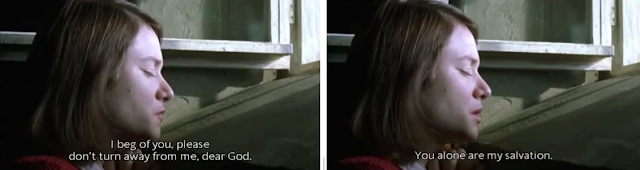
Sophie Scholl Saint Augustine Prayer in "Sophie Scholl: The Final Days"

As she pulled weeds out in the blooming poppy fields, Sophie had plenty of time to reflect. "Isn't it a tremendous enigma and ... almost frightening, that everything is so beautiful? In spite of the terrible things that are going on," Sophie wrote to a friend that night. Convinced nonetheless that God will always have the last word against violence, Sophie vowed, "I will try to take the victor's side."


On her twenty-first birthday, Sophie was on a train at last, off to begin her college studies alongside her brother at the university in Munich. Hans welcomed Sophie into his band of buddies — Christoph, Willi, and Alexander. The close confidantes shared a love of art, literature, classical music, hiking philosophical debate — and a fierce opposition to Hitler. But Munich's Maximilian University was no shelter for dissent. It was an intellectual stronghold of National Socialism governed by a high-ranking SS officer and a site of Nazi book burning.

As grim news came that members of the Resistance had been captured, Hans felt convicted by the old Scholl family principle: you've got to stand up for what's right, no matter the cost. Hans saw that the Communists were taking a stand. Why not the followers of Jesus? "It's high time that Christians made up their minds to do something!" he said to his friends. "What are we going to show in the way of resistance when all this terror is over?" he asked them. "We will be standing empty-handed. We will have no answer when we are asked: What did you do about it?" Hans, Sophie, Christoph, Willi, and Alexander, along with Professor Kurt Huber, formed a secret group they name the White Rose. They imagined the Third Reich as an enormous stone wall of impossibility. As the White Rose, they would discover ways, however small, to knock chips out of the wall.


They believed, with the optimism of youth, that if only their fellow citizens knew the truth about Hitler, things would change; their tangible acts of non-violent resistance would spark an uprising and end the war. At night they painted the walls of university and public buildings, declaring in large black block letters, "DOWN WITH HITLER!" and "LONG LIVE FREEDOM!" The members of the White Rose came from Protestant, Catholic, and Russian Orthodox backgrounds, and they shared the convictions of the Christian faith. As it happened, the inspiration for their boldest action came from a Roman Catholic minister, Bishop Clemens August von Galen. From the pulpit, Galen condemned Nazi eugenics, the program ordering the murder of the mentally ill, physically deformed, and incurably sick. Galen's subversive sermons were transcribed, copied, and circulated secretly by hand — and roused widespread opposition. "Finally someone has the courage to speak," Hans exclaimed, "and all you need is a duplicating machine!"

The White Rose covertly wrote, printed, and distributed thousands of illegal flyers, messages of protest and warning: "We must bring this monster of a state to an end soon." "The war is approaching its certain end." "Hitler cannot win the war — he can only prolong it." They left leaflets in public phone booths, university hallways, and mailboxes. At great risk, they traveled by train to mail anonymous letters from other German cities so that the flyers would bear postmarks from across the country. With a cunning that today's social media gurus would admire, the tiny group created the illusion of a large-scale movement.

Leaders of the Third Reich were desperate to know who was behind the notorious White Rose campaign. The truth came out by chance. On February 18, 1943, Hans and Sophie Scholl stood at the top of a staircase high above the university courtyard just as classes were about to let out. Sophie opened a suitcase of leaflets and emptied it over the balustrade. As hundreds of flyers fluttered down in a blizzard of paper, a janitor stepped out into the hall and saw the brother and sister. He grabbed the pair in a citizen's arrest and consigned them to the Gestapo to be imprisoned and interrogated. Within four short days, Hans, Sophie, and their friend Christoph Probst would be on trial for their lives.


Sophie Scholl Prayer in "Sophie Scholl: The Final Days"

How terrified Sophie must have been. In a private moment, she wrote, "I shall cling to the rope God has thrown me in Jesus Christ, even if my numb hands can no longer feel it." But in the courtroom, without a single witness called in their defense, people say that Sophie, Hans, and Christoph remained calm, composed, clear, unflinching as they were condemned to die. The infamous Nazi judge raged and screamed at the young defendants, roaring until his voice cracked, jumping up again and again in a red-hot frenzy. Standing before him, the twenty-one-year-old Sophie broke in calmly and boldly declared, "Somebody after all, had to make a start. What we wrote and said is also believed by many others. They just don't dare to express themselves."

The court's guilty verdict was swift and merciless. Spoken after a night of inexplicably calm sleep, Sophie's parting words to her cell mate were: "Such a glorious, sunny day, and I must go. But how many must die on the battlefields, how many promising young men. ... What will my death matter if, because of our actions, thousands of people will be awakened and stirred to action!"

As they faced their execution by guillotine on that very same day, Sophie and Hans had only moments to say goodbye to their parents. Holding their hands through the prison bars, Hans reassured them, "I have no hatred. I have put everything, everything behind me." 

Grasping at something, anything, to comfort her daughter in this heartrending farewell, their mother, Magdalene, said, "Remember, Sophie: Jesus." Sophie paused, and then firmly, almost imperiously, her eyes locked on her mother's, replied. "Yes," she said, "but you must remember, too." She was the daughter of Robert and Magdalene, the parents who raised their children to follow uprightness and freedom of spirit. It is horrible how many Christians risk their lives in the war for an outright senseless cause, Sophie lamented, yet "hardly a single person is willing to risk his life to fight Evil. Someone must do it." As she contended before the Gestapo judge: "Somebody had to make a start." 


A prayer of blessing is offered by Sophie and another is offered to Sophie in the film, "Sophie Scholl: The Final Days" by the prison minister, Alt. Here are the words of the prayers:

Sophie: My God, glorious Father, transform this ground into fertile earth so your seeds may not fall in vain. Let the longing grow for You, the Creator, that they so often do not want to see. Amen.
Alt: May God the Father bless you who created you in His image. May God the Son bless you whose suffering and death redeems you. May God the Holy Spirit bless you who leads you to His temple and hallows you. May the Trinity judge you with mercy and grant you eternal life. Amen.

The prison warden, awed by their courage, made an exception to allow Hans, Sophie, and Christoph to have one last cigarette together. He heard Christoph say, "I didn't know that dying could be so easy. In a few minutes we meet again in eternity?" As he put his head on the block, it is said that Hans cried out in a loud voice, "Long live freedom!" 

Thanks to Helmut von Moltke, the sixth leaflet of the White Rose was taken to England via Scandinavia. In mid-1943, millions of copies were dropped by Allied planes over Germany. They now bore the title: "A German Leaflet Manifesto of the Students of Munich."


Soli Jesu gloria.

Christ is all,


Rev. Mike “Sully” Sullivan

Email Pastor Mike | Website | Visit Us | Support Us | Facebook Us

Thursday, December 26, 2019

Advent Magnificat Series | Luke 1:54-55: Blessed to Receive the Promise w/ Our Ancestors w/ Scott Brill + Saturday, December 21

Advent 2019: The Magnificat for Every Tribe, Tongue, and Nation (Luke 1:45-55)

I don't think The Magnificat is done with us. In 2020, I think Mary still wants to sing to us, individually and as a local church. 


Sermon Scriptures | Luke 1:54-55

Sermon Manuscript for "Blessed to Receive the Promise with Our Ancestors w/ Scott Brill 

I am once again honored to preach to you this afternoon, and I am definitely honored by the “company of preachers” from the past month or so that I get to join – Pastor Tim, Pastor Tra’vorus, Mike, and last week, Katie. I consider myself blessed to be able to sit under your teaching – and pray that my teaching is a continuation of yours.

There is also another “company” of preachers that I stand in this afternoon – in particular, three men whose preaching God has used to deeply shape my life in Him. Two of them, Scotti Old and Ed Danks, are now at rest with our ancestors – in the same way, I pray that my preaching today is also a continuation of theirs.

1) Continuity

So let’s pick up on that idea of continuation – or continuity – because Mary’s song definitely does. As we linger one last time in Advent – with Christmas mere days away – and as we immerse ourselves one more time in Mary’s song, we are paying particular attention to the last two verses: “He has helped his servant Israel, in remembrance of his mercy, 55 according to the promise he made to our ancestors, to Abraham and to his descendants forever.”

As these verses show us, Mary is a woman deeply rooted. As a teenager, without much formal education (which would have been unavailable to her as an adolescent woman…) she knows the story of her people from their Scriptures. She is connected to those who have come before her. She has taken their longings and the promises from God that they had been clinging to throughout the centuries – and she has made them her own. Her joyful song is not just about the present (she is literally pregnant with God’s redemption) or about the future (that the child in her womb will one day grow up to be the risen and ascended Savior and coming-again Judge of the world). Mary’s song is about the past. It is a song of Tradition.

Now “tradition” can be a great thing. In the next couple of days, we will all step into traditions that are very important to our families. In the Brill household, as our girls all return for Christmas, there are some things that must be so – the tree has to be decorated a certain way, baby Jesus must go in the manger before we open stockings, we must have the same food (including my Christmas Eve birthday cheesecake – an essential tradition!)

Our traditions are great things when they are our traditions. But when you get to mixing traditions things can get a little dicey. In August, Kathryn and Warren will get married and next year you’ll have to bring together Brill Christmas traditions and McGee Christmas traditions – and work out something that honors the past but also looks forward to the future. For me, that also embodies what I love about Emmaus City Church. To be a truly multi-denominational, multi-generational, multi-ethnic congregation means everyone’s a little comfortable and a little uncomfortable at the same time. It should be that way. That’s the soil that love grows in.

With that in mind, let me fully press in to the first point of my sermon by making nearly everyone in this worship space uncomfortable: Which is that we are blessed to receive God’s promise within the traditions of our ancestors – including the tradition of Mary herself. Because most of my ministry work with InterVarsity is in contexts where Protestants and Catholics come together for mission, I’ve become familiar with the ways in which Protestants are kind of allergic to Mary. There are a lot of reasons for that. The divisions of the past 500 years between Catholics and Protestants are deep, long and painful. And like in all family fights, we have tended to denigrate what is held dear by the folk we’re fighting with. If you Catholics are going to elevate and revere Mary, then we Protestants are going to make her an afterthought – no one really that special.

It is unfortunate, because she is “Notre Dame”
 – our Lady, too. She belongs to the whole church. Because (as we’ve seen) her song is a song for all of us, and her “yes” to God (totally unique in the whole of Scripture) is a “yes” on behalf of all of us. You may have noticed I brought along another edition of “Scott’s sermon show and tell.”

This is an icon (another tradition of the Church!) called “Theotokos of the Unburnt Bush” 300 A.D. or so, Christians attempted to locate holy sites from the OT and build churches or shrines there. One of those was the traditional site of Moses and the burning bush. That quickly became associated with Mary, because she too held the holy presence of God but was not consumed by it.


Theotokos of the Unburnt Bush

This icon shows Mary in solidarity with her ancestors – with Jacob, Moses, Isaiah and Ezekiel. Mary is at the center, because while all these men had spectacular encounters with God’s holiness (and felt fortunate to have lived through it), this woman had God’s holiness inside her.

So we need to consider our reaction to her. Elizabeth was right in her greeting to Mary: “Blessed are you among women – and blessed is the fruit of your womb, Jesus.” Perhaps we need to consider how God may be inviting each of us, and all of us, to move her from the outer edges …

I don’t know the whole story about why we are focusing on Mary and her song in these last weeks of 2019. But I don’t think we’re done with it in 2020. I think the challenge to each of us is to consider how Mary wants to still sing to us – individually and as a local church – into 2020. I commend that to your reflection and prayers over the next few weeks.

2) Solidarity

And now I need to move on to the other two points of this sermon. Mary’s song is a song of continuity with the past – and it becomes our song of continuity with her. But it is also a song of solidarity – both past and present. Mary has taken to her herself the longings of the generations of her people. She knows what to expect when she is expecting justice. She knows that while it looks on the outside as though nothing has changed, her seemingly small “yes” to God has changed everything.

Remember when Mike started the sermon series by recounting the prophetic songs of young women from the late 90s and early 2000s. I was a little surprised that “The Miseducation of Lauryn Hill” was not on that list. In particular, the first track on that album, “Lost Ones”, is a song very much aligned with Mary’s song of turning the tables on the rich and powerful (and ultimately on the devil).


From the opening line “go line up the revolutionaries” the song churns out image after image of reversals (many of them biblical) and build to the refrain of “You might win some, but you just lost one” To me this is perfect anthemic refrain for Mary’s seemingly small ‘yes’: “hey powers and principalities; hey Satan – you might win some, but you just lost one” and that “lost one” to the devil’s voice – in contrast to our mother Eve in the garden – is going to make all the difference in the salvation of the world.

Also throughout this series, we’ve heard stories about faithful women who have said “yes” to Jesus – Fannie Lou Hamer, Mary Paik Lee. So I have another one for you: Chiara Lubich. Chiara grew up in the 20s and 30s as poor Catholic girl in depression-ravaged Trent, Italy. In 1943, in the midst of an Allied bombing campaign against her city, Chiara and some of her young women friends began to read the gospels together as they huddled in the bomb shelter (quite unusual for Catholics of that time to be reading Scripture outside the liturgy). In the midst of their shared suffering, the gospels began to come alive to them in Mary’s words to the servants at Cana wedding in John 2: “do whatever he tells you.” This commitment to living the gospel – and especially the commands of Jesus to love one another and lay down one’s life for one’s friends began to draw more and more people to their little community, which became known as the Focolare (an Italian word meaning “hearth”). The Focolare are now one of the largest lay communities of Catholics (and includes non-Catholics as well) in the world and Chiara herself became a spiritual guide to many people – including Pope John Paul II.

Here’s a quote from Chiara on how “doing” or “living” the great reversal of the Magnificat influenced the early ministry of the Focolare:


We had aimed at the poorest areas of Trent, in the effort to kindle the love the Gospel speaks of there, looking after the needy with the help of those who were better off. By doing so, we hoped to bring about equality in fraternity in the city. This activity won the esteem of the local politicians and aroused their desire to do likewise on a larger scale. Consequently, instead of a vicious circle, mutual love created a virtuous circle which re-established trust, re-opened hope and recomposed the torn personal and civil bonds. In a context of war-caused lawlessness, we started out again from love—the law of laws, the supreme value, the principle and synthesis of all values. This love, capable of re-building community, brought about unity among citizens which is the essential premise of any communal life.

I think Chiara’s “yes” to Jesus, modeled after Mary – is a challenge to me and to us, Emmaus City: How is Jesus calling me, calling us together, to build a virtuous circle, rather than a vicious one – and to be a part of the “great reversal” here in Worcester by fostering mutual love? To see more “lost ones” to the devil through our sharing and self-giving?

3) Abundant Life

In this passage, we’ve seen that Mary’s song is a song of continuity, it’s a song of solidarity, but there’s more going on there, and it’s found in the very last word of her song – “forever.” So Mary’s song is also a song about the future I have to admit I’m kind of put off that word ‘forever’ – it sounds a little too “happily ever after” for me. And I’m not a happily-ever-after kind of guy. It’s probably appropriate that I’m preaching on the darkest day of the year. Those of you who’ve spent some time with me know that I can be a pretty skeptical and even cynical person. If you’re having too much fun at your holiday party, I’m the guy you need to invite. I’ll come throw the proverbial wet blanket on the festivities.

My own internal refrain is the exact opposite of Mary’s song; on repeat inside my head often is the phrase: “This isn’t going well, and probably isn’t going to end that well” And in a way I’m right. At some point it’s not going to “end well” for any of us. As the English writer George Bernard Shaw once said: “the statistics on death are overwhelming; one out of every one person dies” This is why the manufactured happiness that is promoted during the Christmas season can feel pretty unreal to some of us. And for others even a place of pain and grief – as we connect more to the memories of loved ones we have lost or trauma we have experienced around this time of the year.

But – and now I’m preaching to myself – Mary’s song is about way more than having yourself a merry little Christmas and muddling through somehow. Mary is inviting us further down – into the pain and grief and out the other side. Mary’s song is a song of life. Life for us. Life for Mary. Life for “servant Israel”; life for Abraham. She is not evoking the memories of her ancestors. She is fully aware that they are alive and present with her. The promise of God to them was not some far-off distant hope for a better future for their descendants. The promise of God to them was that they would not die. That the better future for the world included them in a resurrected life.

It’s interesting to me that when Jesus confronted the resurrection skeptics in Mark 12, he invokes the story of Moses in the burning bush: 26 And as for the dead being raised, have you not read in the book of Moses, in the story about the bush, how God said to him, ‘I am the God of Abraham, the God of Isaac, and the God of Jacob’? 27 He is God not of the dead, but of the living; you are quite wrong.”

Yes, Jesus, remind me again that I am “quite wrong” to become so fixated on death and darkness that I lose sight of life and light that you have promised. 

When you and I were baptized, there was a promise spoken over us. It was the promise that was present to Jacob (Israel) through the ladder at Bethel. It was present to Moses at the burning bush. It was present to Isaiah and Ezekiel when they were called to be prophets. It was the promise that was present to Mary at the annunciation and in her Magnificat. It is the promise has been present and spoken to every generation of Christians since then, for 20 centuries. It is the promise of eternal life. The promise that Jesus will not leave you in your sins or in your grave, but that he is coming to turn the world around. To bring the new heavens and the new earth and that you and everyone who shares in that promise will stand on that new earth with him in resurrected glory.

And it is a promise that will be repeated in the eucharist that we are about to share. The promise that it is not just us who are sharing it, but that Jesus is giving himself to all of his people together at the same time. We enter a space that is time outside of time. And all those who have gone before us in Jesus are alive in Jesus with us.

In my own Lutheran tradition there are two reminders of this: First is the architecture of some churches, with the communion rail in a semi-circle around the table – this is designed to remind you that the semi-circle is completed on the “other side” and that when you knell to receive Jesus, others are present (your ancestors) that you cannot see. Second, at the end of one of the prayers that is used in the Eucharist: “Join our prayers with those of your servants of every time and every place, and unite them with the ceaseless petitions of our great high priest until he comes as victorious Lord of all.”

As the worship team comes up to prepare us for sharing this last Advent meal together, I invite you to reflect in prayer. Is there something that Jesus is inviting you into this evening – from the traditions of the past, from the work of the present, or from the future hope of life together?

Advent is here. The light has come and the darkness cannot overcome it. Let's anticipate how Jesus, our Emmanuel, God with us, is bringing wonder, beauty, grace, and power during this season. Some of us sing because we believe. Some sing or listen until belief comes. Together, we step into holy imagination.

Call to Worship | Psalm 22:3-5

3
You are enthroned as the Holy One;
You are the one Israel praises.
4 In You our ancestors put their trust;
they trusted and You delivered them.
5 To You they cried out and were saved;
in You they trusted and were not put to shame.


Joy to the World
Isaac Watts, 1719 A.D.

All of heaven and all creation sing
The wonders of His love!


Joy to the world, the Lord is come!

Let earth receive her King;

Let every heart prepare Him room,

And heaven and nature sing ... (x2)
And heaven and heaven and nature sing! (Refrain)

No more let sins and sorrows grow,

Nor thorns infest the ground;

He comes to make His blessings flow

Far as the curse is found ... (x2)
Far as, far as the curse is found! (Refrain)

He rules the world with truth and grace,

And makes the nations prove
The glories of His righteousness,

And wonders of His love ... (x2)
And wonders, wonders of His love!

A Day of Glory
Austin Stone Worship, 2012 A.D.

A day, a day of promise,
A hope to end our woe,
A day that tells of triumph
Against our vanquished foe!

In flesh His entrance humble,
The swaddling clothes His robe,
The meek displayed in power,
The Prince of Peace now known!

Let angels shout the triumph
As mortals raise their voice,
"Behold the Son of heav'n and earth,
The King of kings is born!"


A day, a day of glory,
When Jesus calls us home.
Our glorious King eternal
Returning for His own! (Chorus)

Gloria, gloria, gloria,
Our King has come! (Repeat 2x + Chorus)


What Mercy Did for Me
People & Songs, 2017 A.D.

I was hopeless, I knew I was lost.
Death and darkness were my only songs.
I needed someone to come rescue me
Then mercy heard my plea ...

Lord, You found me, You healed me,
You called me from the grave!
You gave me Your real love,
I thank You, Jesus,
You washed my sins away!
Oh, now I'm living like I'm forgiven,
You came and set me free!
That's what Your mercy did for me! 


You gave me beauty for my guilty stains
And now I'm living today by His grace.
So excuse me if I can't contain my praise
'Cause I know that I've been changed!
(Chorus)

Every morning mercy will restore me, I will proclaim!
And even if the world should fall before me, I will proclaim!
(Chorus)

O Come All Ye Faithful
John Francis Wade, 1751 A.D.

O come all ye faithful, joyful and triumphant!

O come ye, O come ye to Bethlehem;

Come and behold Him born the King of angels:
O come let us adore Him ... (3x)

Christ the Lord!

God of God, light of light,

Lo, He abhors not the Virgin's womb;

Very God, begotten, not created:

O come let us adore Him ... (3x)

Christ the Lord!

Sing choirs of angels, sing in exultation,
Sing all ye citizens of Heaven above!

Glory to God, glory in the highest:

O come let us adore Him ... (3x)

Christ the Lord!

The Cradle and the Cross
Austin Stone Worship, 2013 A.D.

Oh the beauty and the loss
Of the cradle and the cross,
The Son of God so humbly sent for us.
Into darkness came the light,
Faith of fathers became sight

When the Christ arrived to save the fold of God.

Humanity embraced, He left a perfect place,
The prize of God in lowly manger lay.
Angels shout with joyous song,
Saints and sinners sing along

In the highest place, "Glory, Gloria!"

Immanuel, God with us!
The Lamb of God slain for us!
Finally, our hope’s secured
By the beauty of the cradle and the cross.


The Creator of the stars,
Then in flesh received the scars

On the cross He paid the debt of sinners earned.
And even death could not Him hold,
Peace on earth we see unfold
As the risen Christ ascends in victory! (Chorus)

Stars and angels sing around You, "Gloria!"

Hearts unfold like flowers before You, "Gloria!"
Joyful, joyful, we adore You, "Gloria!" (Chorus)

Prayers of Confession and Assurance

One: Jesus, today, we join in singing Your words
to the next generation. We confess we need You to ...

Congregational Prayers: "Lord, hear our prayer."

One: And now we pray together, Jesus, as You taught us to pray ...

All: Our Father who is in heaven, hallowed be Your name.
Your Kingdom come, Your will be done
on earth as it is in heaven.
Give us today our daily bread
and forgive us our trespasses as we forgive
those who trespass against us.
And lead us not into temptation, but
deliver us from evil for Thine is the
Kingdom and the power and the glory
now and forever. Amen.


Pass the Peace | In the Story of God, Jesus declared, "Peace I leave with you; My peace I give to you" (John 14:26) during humanity's darkest, most tragic weekend of His death. And then after Jesus was crucified and resurrected, defeating evil and death, He said, "Peace be with you ... Receive the Holy Spirit" (John 20:21-22). Somehow, with Jesus, peace is possible even in our darkest moments. During this time, we desire to share with each other peace that passes understanding, empowered by the Spirit of Christ.

The peace of the Lord by always with you.
And also with you.

Prayers of Preparation for Eucharist
Matthew 26:26-29; 1 Corinthians 11:23-26

Prayer Asking for Jesus' Help
Jesus, Son of David, have mercy on me. I want to see. Please reveal to me who You are. Give me ears to hear You, and understanding for the Good News You are saying to me today. Amen.

Prayer for Communion with Jesus and Each Other
Jesus, by Your Spirit, fill us with Yourself, the true Bread and Vine. We turn to You now to unite us, strengthen us, and empower us to be Your Kingdom family of servants and witnesses together until You return and make all things new. Amen.

'19 Advent Prayer | We Magnify You, Jesus!

Jesus, our Immanuel, God with us, reveal You are here now. Disrupt our way of life without You. If in the darkness of Mary's womb, the holy child grew, You can grow in us. If in the darkness of the world's pain, Your blessed light came and overcame, You can overcome the darkness in us and spark Your light and love to spread through us. In our own doubting of You, and of ourselves, cause us to be born again to a living hope that begins to grow like a lump in the throat: the holy hope that You came and still come to us, that You will be born again in our midst. 
When people in the 1980s in Guatemala began to sing Mary's Magnificat song, the government outlawed this first Advent hymn. It was deemed too dangerous and revolutionary because children, women, and men began to believe that freedom and change were indeed possible, and that following the way of Jesus would interrupt the flow of civilization as they knew it. Lord Jesus, our Savior, open our mouths and our hearts to sing with them the words of Your mother, Mary, 'My soul magnifies the Lord, and my spirit rejoices in God my Savior, for He has looked with grace and favor on us, His humble servants! ... The Mighty One has done great things for us and holy is His name! ... ' 
Holy Spirit of God, make us believe the Magnificat's words are true, that You look on us and intend to bring the same dynamic change in us and through us. Make us good like You and beautifully dangerous, embodying the words, works, and way of Jesus that transform lives in Worcester and beyond. We pray all these things in humble, hungry, holy, and hopeful confidence because we are praying in King Jesus' almighty name. Amen.
+ Prayer adapted from "A Divine Disruption" by Christiana Rice & "Come and See" by Frederich Buechner


Our World Belongs to God Q&A 23 | 2008 A.D.

Q. Why do we magnify the Lord and rejoice 

with Mary that Jesus Christ, the Messiah, is born?

A. Remembering the promise
to reconcile the world to Himself,
God joined our humanity in Jesus Christ—
the eternal Word made flesh.
He is the long-awaited Messiah,
one with us and one with God,
fully human and fully divine,
conceived by the Holy Spirit
and born of the virgin Mary.

Benediction Based on The Magnificat

Go with our Lord Jesus Christ and and be blessed.
Magnify Him and rejoice that He is Immanuel, God with us.
Hallelujah! We are not alone! God's mercy and favor on
us is displayed in the birth of Jesus. God is revealing
peace on earth in all of us who are willing to be born again
in Christ. Be full, be lifted up. As you have freely received,
freely give for the glory of God, for the love of others, and
for the life of the world.

Next sermon audio + liturgy notes post: Benedictus | Blessed to Prepare the Way of the Lord in '20

Emmaus City Church is a local church made up of Micro City Groups.

A Micro City Group (CG) is a growing group that begins with 3+ people – children, women, and men included – who are befriending, serving, and loving a community together in Jesus' name in Worcester. Micro CGs start small enough that people can know you and value you, but seek to grow large enough (10-30 people) to make an impact in communities throughout Worcester. Each CG gets together throughout a month (i.e. dinners, times of prayer or learning from the Story of God in the Bible, acts of service, parties, etc.) to see Worcester become a city of neighbors and friends that showcase Jesus' love and compassion to all. Those who are cautious or curious to hear and see what it means to follow Jesus are just as welcome as those who believe Jesus is Lord and God and seek to follow Him in every area of life.

Current Micro City Groups: Lincoln Village | W.R.A.P. | Recovery | YMCA | Route One | Westside 

To connect with one of the City Groups above, please contact info@emmauscitychurch.com

Christ is all,

Rev. Mike "Sully" Sullivan