|
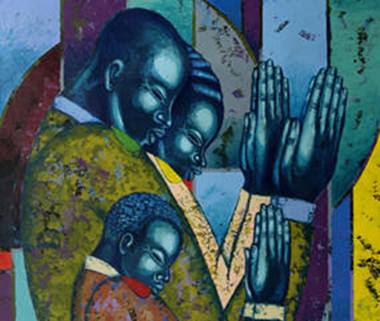
| Psalm 126 by Salt + Gold |
When renewed and revived,
we discover the same phenomenon —
a person or a handful of people
who have gotten to the end of themselves,
who cannot tolerate it anymore,
who fall at the feet of Christ
and are filled with His presence,
who become infectious agents
of His Kingdom in the world.
Contenders for His renewal.
+ Mark Sayers,
Along with Ready or Not, We Died Before We Came Here, A Time to Heal, Red Skies, God in the Garden, Anonymous ... and Longing for Revival, Reappearing Church by Mark Sayers since I read it for the first time during the fall of 2021 has been a key book the past few years that continues to fuel my thoughts, prayers, and meditations heading into 2025. Part of the reason why is captured in what Mark says during the 60-second trailer for Reappearing Church:
This dangerous question kept
coming into my head,
this time from God,
it could only come from God:
"What if at this moment
I would like to renew
the Western Church?
"What if I have to let
it get so bad?
What if you have to get
to the point where you're
incredible worship that is just
trying to be as close to the culture
as possible, it's not going to work?
"Leaders who project this
atmosphere and personal of cool
and seem really relevant,
that's not going to work?
"You can download every Netflix series,
"You can download every Netflix series,
comment on it,
watch every independent movie,
listen to every cutting edge album,
reference it in your churches,
and that's not going to work?
"Because renewals happen
when there's nothing left
to rely on except
contending on your knees for
God's presence to move."
My hope in the year ahead is that Emmaus City Church will grow in praying and contending together on our knees so that we may learn how to walk with more unhinged resurrection hope, seeking to see to join what Jesus is up to in us and in Worcester.

Reappearing Church:
Personal Renewal Is Friendship with God
Personal Renewal Is Friendship with God
"It is time for you, noble friend,
to be known by God and
to become His friend,"
wrote the early church father
Gregory of Nyssa.
This is the root of personal renewal
— a friendship with God ...
to be known by God and
to become His friend,"
wrote the early church father
Gregory of Nyssa.
This is the root of personal renewal
— a friendship with God ...
... Freed from the rule of the crowd, from our instinct to anxiously herd into the group-think, from the buzz of constant distraction, we turn from the faces of those around us to look upon His face. As we do this, we begin to grasp who He really is, and strangely as we look toward God, our true selves come into clear view. We are struck by how far we fall short of Him, how we have tried to remold Him in our own image; our pitiable games at playing god are exposed, the ruse of radical individualism is shown for the fraud it is. Just at the moment when, in comparison to God, it seems that we as humans could not shrink any smaller, the divine hand of grace reaches out to remake us. Shocked by the seeming incongruence of such a moment, we find ourselves again standing before the paradox of the cross, in which justice and love are held together.
Every renewal and revival
begins with people
who reach such a moment,
who truly come to the end of themselves,
discovering the depth of their own sin and
the immensity of a holy God
who is intent on removing
rebellion, evil, and ill from the world,
yet who sent His Son to die upon the cross
to invite us to be on His side
in the remaking of the world.
begins with people
who reach such a moment,
who truly come to the end of themselves,
discovering the depth of their own sin and
the immensity of a holy God
who is intent on removing
rebellion, evil, and ill from the world,
yet who sent His Son to die upon the cross
to invite us to be on His side
in the remaking of the world.
Such moments then become
seeds planted in harvest.
seeds planted in harvest.
No longer do we face
the heavy task of defining ourselves,
or crafting our own identity;
instead, He will do that now, when
we fully give ourselves over to Him.
the heavy task of defining ourselves,
or crafting our own identity;
instead, He will do that now, when
we fully give ourselves over to Him.
He will begin molding us into a redeemed version of ourselves we could never believe possible. For He wishes to shape us, so we can return to our original purpose of partnering with Him in His plan to move history to His purposes, flooding the world with His presence.
Reappearing Church:
The Searching Manifestation of Presence
The Searching Manifestation of Presence
(With true friendship with God), the barred rooms reserved for our personal autonomy must be opened up, the keys must be handed over. His presence must be invited to flood in, filling every inch of our lives.
For our goal is not self-actualization,
nor self-expression; rather,
it is life with God.
Life with the presence.
Life with the presence.
For as we decrease, we become more filled with His presence, taking His presence with us into our lives, into the web of relationships in which we move, the places we visit, the moments in time we inhabit ...
The Western life system
has formed us
in a particular way
that creates people
who resist the move of God
in subconscious ways.
The average Westerner
is a radical individualist
who is deeply afraid
of compromising their autonomy.
He or she determines
their self-worth and identity
primarily horizontally,
via the media, culture, or peers.
We are shaped by the
passive-aggressive tone of consumerism,
where we want maximum say
with minimum responsibility.
We are shaped primarily by
our fluid and ever-shifting feelings.
We yearn for community and connection,
yet fear commitment and consistency.
We wish for justice
while desiring hedonistic payoffs.
We religiously point the finger at others
while jealously guarding our own right
to do as we please.
All these factors place us
in a spiritually precarious place.
has formed us
in a particular way
that creates people
who resist the move of God
in subconscious ways.
The average Westerner
is a radical individualist
who is deeply afraid
of compromising their autonomy.
He or she determines
their self-worth and identity
primarily horizontally,
via the media, culture, or peers.
We are shaped by the
passive-aggressive tone of consumerism,
where we want maximum say
with minimum responsibility.
We are shaped primarily by
our fluid and ever-shifting feelings.
We yearn for community and connection,
yet fear commitment and consistency.
We wish for justice
while desiring hedonistic payoffs.
We religiously point the finger at others
while jealously guarding our own right
to do as we please.
All these factors place us
in a spiritually precarious place.
The hard truth is that even when we come to the end of ourselves, stepping into a holy discontent with our culture, these patterns have deeply shaped us. They have turned us into the kind of people ... who most likely will resist renewal ... J.I. Packer writes that "it is with this searching, scorching manifestation of God's presence that renewal begins, and by its continuance that renewal is sustained." His presence is both the destination and the road. As His presence comes among us during renewal, our flesh — that part of us which wishes for autonomy, to achieve our own kingdom separate from God — is confronted. It feels the scorching of His presence. This can happen on both a personal and corporate level as God shapes and prepares us for the end of history when His presence will fill the earth, and to mold us into agents of His presence in the world, partnering with Him in His renewal plans.
Reappearing Church:
Holiness, Conviction, Confession
Holiness, Conviction, Confession
God is holy, and so are His dwelling places. His temples — our lives, the Church, or creation — must be filled with His holiness. In 1904, a revival touched Wales. Upwards of 100,000 people came to faith in an outpouring of God's presence that radically changed the face of the country. A crucial spark that lit the fire of revival occurred when a young man named Evan Roberts prayed with a small group of young people after a service. He left the Lord challenging them to do the following:
+ Put away any unconfessed sin
+ Put away any doubtful habit
+ Obey the Spirit promptly
+ Confess Christ publicly
All seventeen responded, choosing the way of holiness. This quiet and sacred moment, a foundation, must be seen in relation to the incredible and visible victories that occurred in the large-scale move of God across Wales.
Renewal cannot come without holiness.
God wishes to rid His temples
of what does not please Him.
God wishes to rid His temples
of what does not please Him.
Conviction can be met with defensiveness and avoidance, or even then temptation of self-condemnation, yet its true partner is confession. When God lovingly shines a light on an area in which we fall short of His standards, it is an act of mercy. The divine sword comes, but its intent is to cut us free of the net that ensnares our hearts. For as James instructs, confession brings spiritual power and effectiveness: "Confess your sins to each other and pray for each other so that you may be healed. The prayer of a righteous person is powerful and effective" (James 5:16).

Reappearing Church:
Hardened Soil Turned Back
into Fertile Earth
Hardened Soil Turned Back
into Fertile Earth
We recently renovated our home. Our backyard was dug up, and a truckload of fresh, rich, fertile soil was brought in. We sowed into the ground a bag of expensive grass seed to ensure a lush lawn. However, it was summer, and the scorching sun was arriving. Apart from a few areas, the grass struggled to grow. Months later, the grass still was in patches, and the fertile rich soil had hardened into a grassless surface. My suggested solution was simply to buy some more seed online and throw it on the hardened ground. Much wiser was my wife, who went out one afternoon with a rake, breaking and digging up the hardened soil. It was an act of destruction that had to precede the creation to come. If I had gone ahead with my foolish plan, the seed would have sat on top of the hardened layer of earth, only to wash away when the rains came.
Before His rains of blessing
and renewal come,
the soil must be broken up,
turned over,
so we can be ready to receive.
and renewal come,
the soil must be broken up,
turned over,
so we can be ready to receive.
Hardened soil must be
turned back into fertile earth.
turned back into fertile earth.
In renewal, the breaking down
must come before the building up.
God prepares the soil of the heart
by sending His presence to convict us.
As God's holy presence comes among us, because it comes to fight the flesh, a conviction regarding sin will be felt strongly. In light of His presence, what was accepted before can no longer be tolerated. Sin must be discovered and exposed to the light of His coming. When this happens, "it is time to cease excusing our sins by calling them shortcomings or natural weakness, or by attributing them to temperament or environment. It is time to cease justifying our carnal ways and materialistic outlook by pointing to others who are the same," writes Arthur Wallis, noting that we must step into this conviction, which removes the way in which our flesh is resisting His Spirit, for "we must face our sins honestly in the light of God's Word, view them as He does and deal with them as before Him. Until we do, it would be well that God should withhold the rain of revival."
Reappearing Church:
Contenders for His Renewal
Through Prayer and Fasting
Contenders for His Renewal
Through Prayer and Fasting
The Church begins when a disparate and disheveled group of very ordinary people, crying out to God, are filled with His presence. This handful of renewed people, with no army, no political power, and little funds, would turn the world upside down.
At every moment the Church has been
renewed and revived,
we discover the same phenomenon —
renewed and revived,
we discover the same phenomenon —
a person or a handful of people
who have gotten to the end of themselves,
who cannot tolerate it anymore,
who fall at the feet of Christ
and are filled with His presence,
who become infectious agents
of the Kingdom in the world.
I shall see no hope
until individual members of the Church
are praying for revival,
perhaps meeting in one another's homes,
meeting in groups amongst friends,
meeting together in churches,
meeting anywhere you like, and
praying with urgency and concentration
for a shedding forth of the power of God,
such as He shed forth
one hundred and two hundred years ago,
and in every other period of revival,
and of reawakening.
There is no hope until we do.
But the moment we do, hope enters.
+ Martyn Lloyd-Jones
Those renewed, experiencing a microcosm of revival within themselves, those who are hungry and thirsting for righteousness, find each other.
We discover that
much of our holy discontent
is born of a life that is suffering
from what Richard Foster calls
"the agony of prayerlessness."
Our lives are designed
to be in intimate relationship
and friendship with God.
When we don't pray,
we become spiritually dehydrated.
Understanding now
that the challenges of life are
to be met not with futile human striving
but on the bended knee,
prayer becomes indispensable to living.
As we step into contending prayer, no longer do we fill awkward silence with perfunctory prayers and laundry lists of inconsequential requests. Instead, rumbling, reverberating, desperate prayers begin.
Prayer Begins
Eventually holy discontent forms
into a desire to pray
that can no longer be ignored.
With the status quo no longer tolerated,
the only way forward is
to cry out to God
for His intervention into the world.
Prayer moves from something desirable
but rarely practiced in the Christian life
to something indispensable and foundational.
Small Groups Begin Praying Together
A handful of people find each other.
They are united by their driving desire
to pray and contend for God to act.
In the north of Scotland,
two elderly disabled sisters
prayed together by their fire,
leading to the Hebridean revival.
The revival that broke out in New York
during the nineteenth century
can be traced back to
a handful of businessmen praying
at lunch in a small room in Wall Street.
The awakening that occurred in South India
in the 1930s was contended for
by three preteen boys, w
ho had become transformed by God,
and early each morning prayed
in the jungle on the edges of their town.
They are united by their driving desire
to pray and contend for God to act.
In the north of Scotland,
two elderly disabled sisters
prayed together by their fire,
leading to the Hebridean revival.
The revival that broke out in New York
during the nineteenth century
can be traced back to
a handful of businessmen praying
at lunch in a small room in Wall Street.
The awakening that occurred in South India
in the 1930s was contended for
by three preteen boys, w
ho had become transformed by God,
and early each morning prayed
in the jungle on the edges of their town.
Contending & Standing in the Gap
Prayer that proceeds God moving
is contending prayer.
To contend is to struggle,
to stretch for something.
This is proactive prayer,
beseeching God to move,
in which we cry out for God's mercy
on behalf of ourselves,
our communities, and nations.
To, as the book of Ezekiel states,
"Stand before me in the gap
on behalf of the land" (22:30).
Prayer that proceeds God moving
is contending prayer.
To contend is to struggle,
to stretch for something.
This is proactive prayer,
beseeching God to move,
in which we cry out for God's mercy
on behalf of ourselves,
our communities, and nations.
To, as the book of Ezekiel states,
"Stand before me in the gap
on behalf of the land" (22:30).
Contending Prayer is Spiritual Warfare
As we adopt the posture of contending,
it becomes vital to understand
that we are not contending against
those who come against us in opposition,
but as Scripture teaches us,
the powers and principalities,
the forces that resist Christ's rule,
wishing to keep us in a state of enslavement,
and oppose God's plan of renewal in the world.
We practice contending prayer,
then, to acknowledge that God fights
our spiritual battles for us.
it becomes vital to understand
that we are not contending against
those who come against us in opposition,
but as Scripture teaches us,
the powers and principalities,
the forces that resist Christ's rule,
wishing to keep us in a state of enslavement,
and oppose God's plan of renewal in the world.
We practice contending prayer,
then, to acknowledge that God fights
our spiritual battles for us.
Contending prayer then becomes normative
amongst those seeking renewal.
Such prayer asks God to
change our churches, our culture,
and our world,
yet it also changes us as we pray,
reshaping us in the patterns of the Kingdom.
amongst those seeking renewal.
Such prayer asks God to
change our churches, our culture,
and our world,
yet it also changes us as we pray,
reshaping us in the patterns of the Kingdom.
+ Excerpts above from
Chapter 9: Preparing for Renewal &
Chapter 12: Remnants in
by Mark Sayers
Bonus Quotes
You never go away from us,
yet we have difficulty in returning to You.
Come, Lord, stir us up and call us back.
Kindle and seize us.
Be our fire and our sweetness.
Let us love. Let us run.
+ North African St. Augustine of Hippo
Christianity has died many times
and risen again;
for it had a God who knew
the way out of the grave.
+ G.K. Chesterton
Bonus Podcast
Christ is all,
Rev. Mike “Sully” Sullivan